


Corporate and professional website design establishes a company's digital presence, functioning as a 24/7 business card that builds credibility and trust. Unlike e-commerce or personal blogs, it focuses on communicating value, showcasing services, and nurturing relationships with clients, investors, and potential employees.
Corporate & Professional in Action
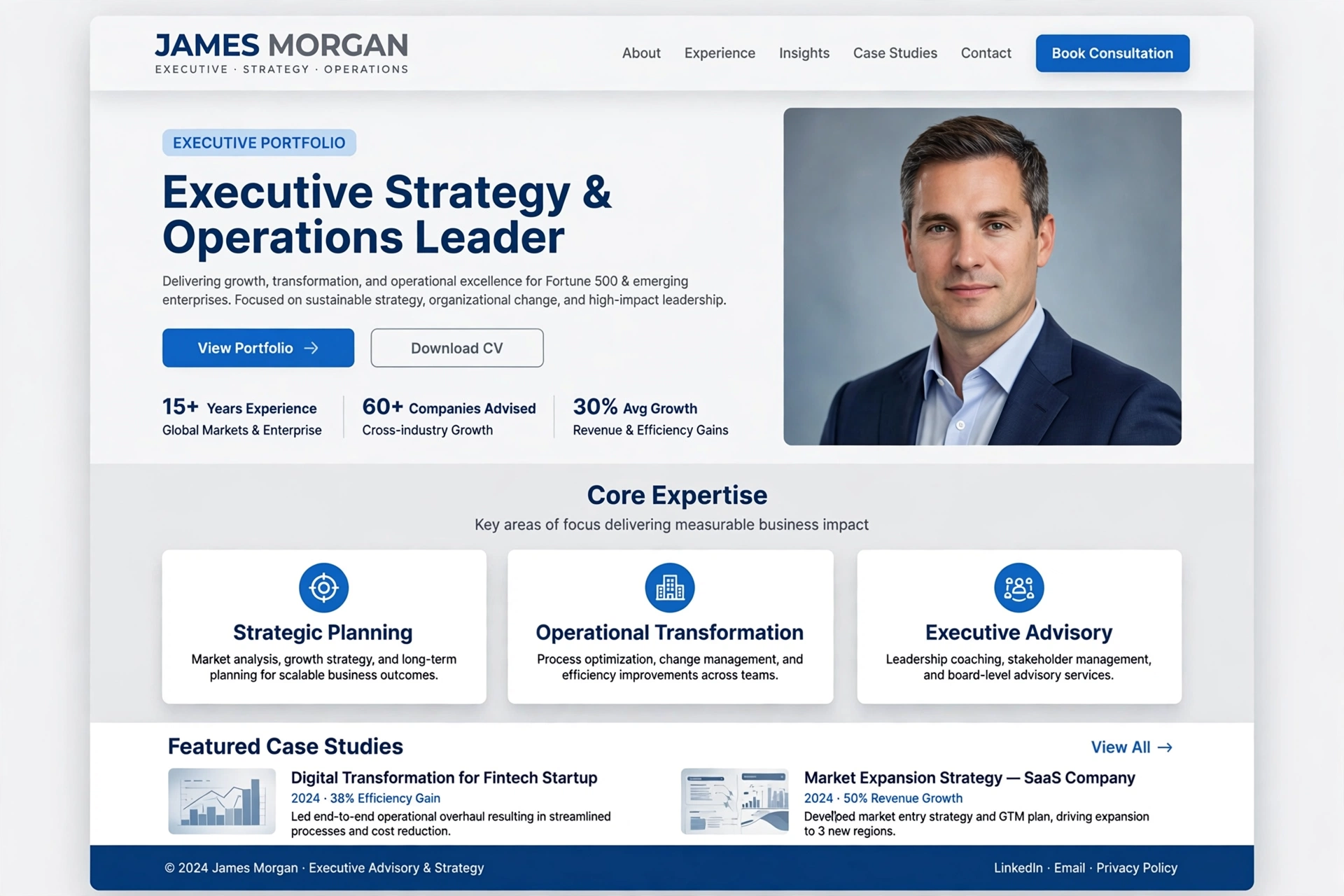
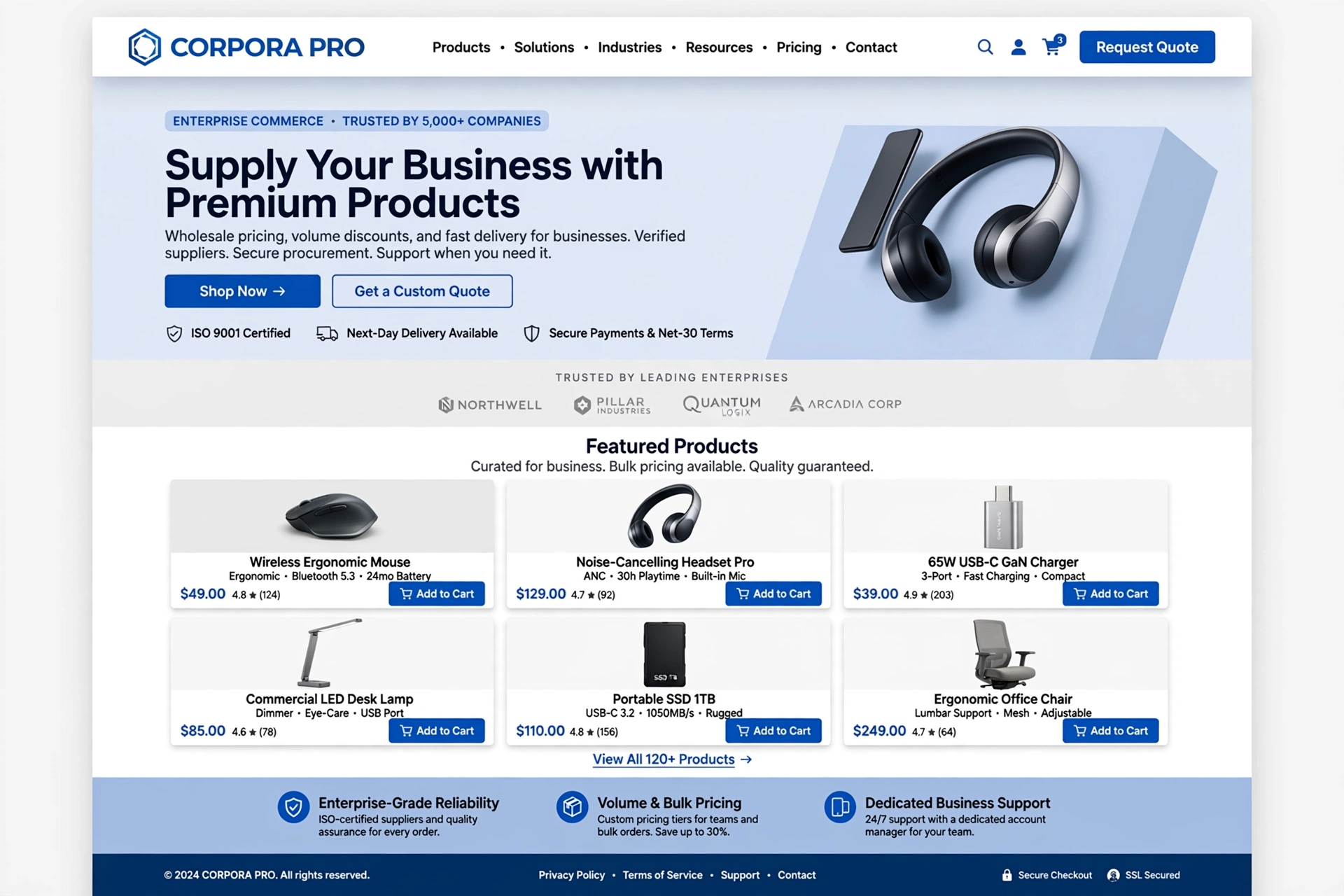
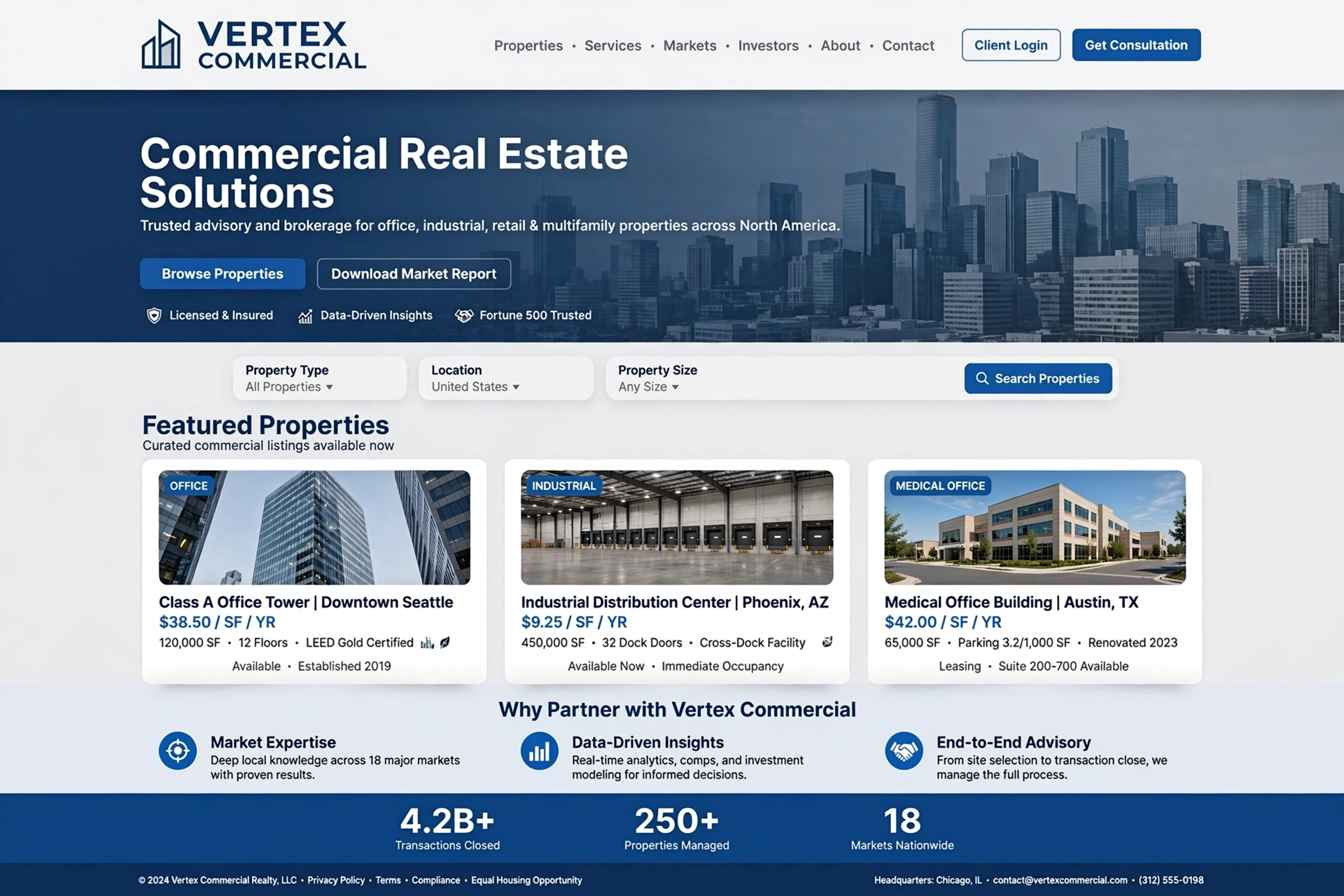
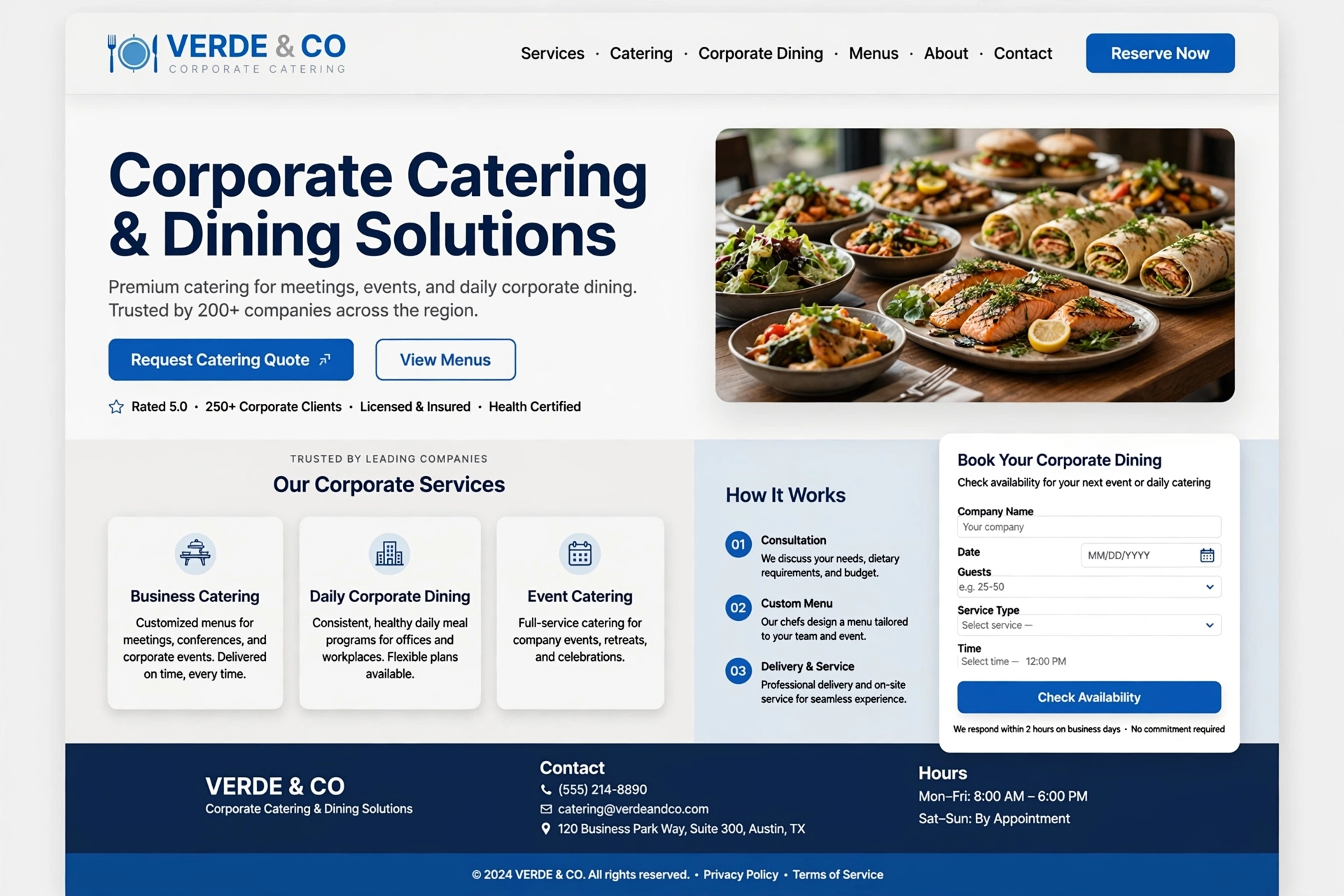
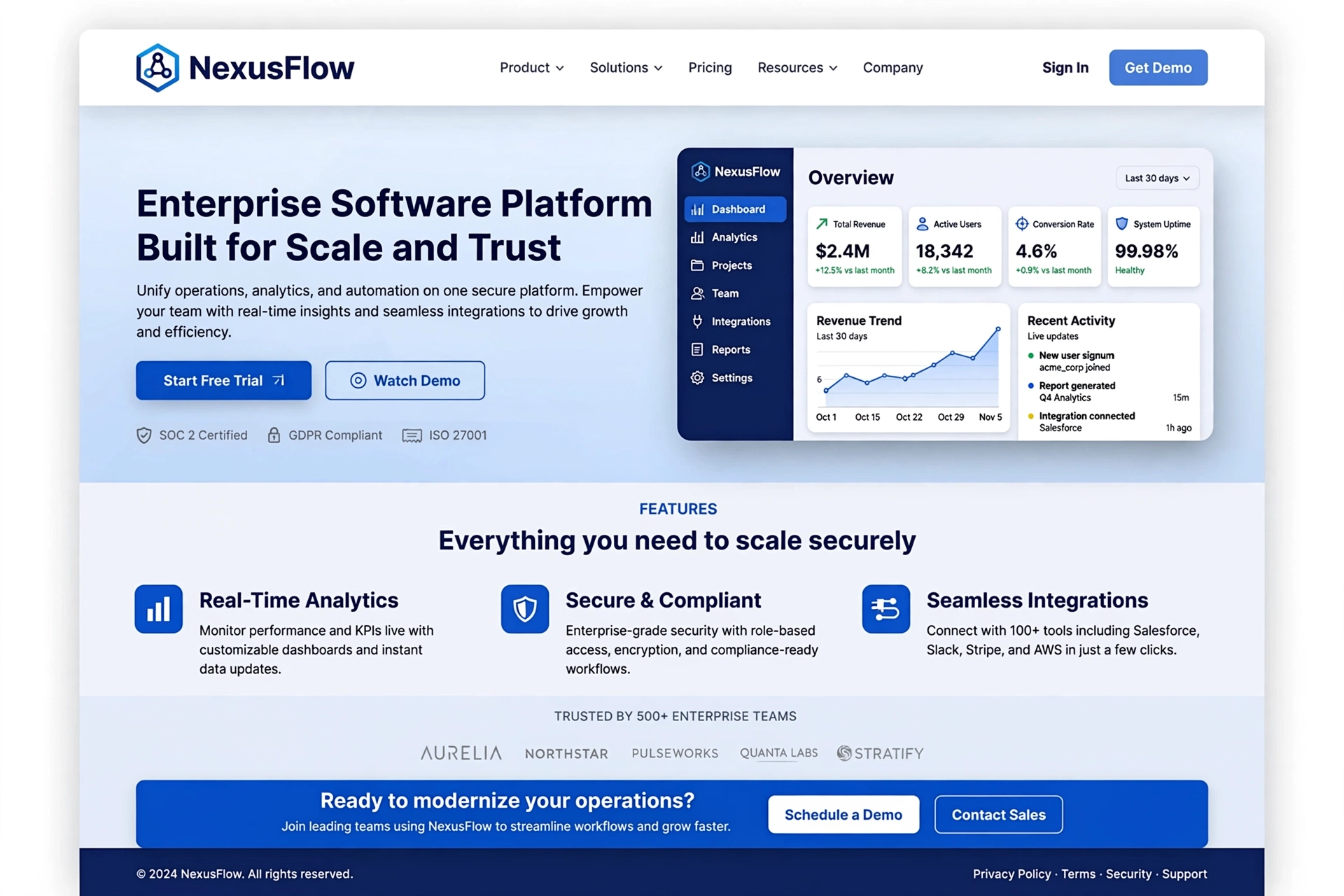
1. Core Objectives
A meticulously planned corporate website design incorporates clear objectives that serve as the foundation for every design decision.
Brand Integrity & Trust
Communicates corporate values, history, and mission to establish immediate authority. The design should reflect the company's character and reliability through consistent visual language and professional tone.
Lead Generation
Guides visitors to actionable goals—such as booking a consultation or requesting a quote—instead of focusing on immediate impulse purchases. Every page is designed with a clear conversion path.
Stakeholder Information
Provides dedicated hubs for investors, partners, and job seekers rather than just consumers. This ensures all audiences find the information they need quickly and efficiently.
For Everyone:
A corporate website is like a firm handshake and a well-tailored suit — it communicates professionalism, confidence, and respect before a single word is spoken.
2. Visual Consistency & Brand Identity
Strict adherence to brand identity is non-negotiable in corporate design. This includes established color palettes, typography, logos, and iconography.
/* Corporate Brand Identity System */
            :root {
            /* Primary brand colors */
            --brand-primary: #1a365d;
            --brand-secondary: #2b6cb0;
            --brand-accent: #e8542c;
            --brand-neutral: #f7fafc;

            /* Consistent typography */
            --font-corporate: 'Inter', system-ui, sans-serif;
            --font-headings: 'Cormorant Garamond', serif;

            /* Logo size and spacing */
            --logo-height: 48px;
            --logo-margin: 1rem 0;
            }

            /* Apply consistently across all pages */
            .brand-logo {
            height: var(--logo-height);
            margin: var(--logo-margin);
            }

            .heading {
            font-family: var(--font-headings);
            color: var(--brand-primary);
            }
For Everyone:
Visual consistency is like a company's signature — it must be recognizable and unwavering across every touchpoint to build trust and recognition.
3. Responsive Layouts & Mobile-First
Ensures optimal viewing experiences across all devices, from desktop monitors to mobile phones. A mobile-first approach is essential as more professionals access corporate sites on the go.
/* Mobile-first grid for corporate layouts */
            .corporate-grid {
            display: grid;
            grid-template-columns: 1fr;
            gap: 1.5rem;
            }

            /* Tablet: 2 columns */
            @media (min-width: 600px) {
            .corporate-grid {
            grid-template-columns: repeat(2, 1fr);
            }
            }

            /* Desktop: 3 columns with a sidebar */
            @media (min-width: 1024px) {
            .corporate-grid {
            grid-template-columns: 2fr 1fr;
            }
            }

            /* Fluid typography for readability */
            body {
            font-size: clamp(1rem, 1.1vw, 1.25rem);
            }
For Everyone:
Responsive design is like a well-tailored suit — it fits perfectly whether you're in a boardroom or a coffee shop, on a desktop or a phone.
5. Whitespace & Visual Hierarchy
Balances text, images, and white space to lead the reader's eye toward important calls-to-action (CTAs). Whitespace in corporate design is strategic — it signals clarity and confidence.
/* Clear hierarchy with generous whitespace */
            .hero-section {
            padding: 4rem 2rem;
            text-align: center;
            }

            .hero-section h1 {
            font-size: clamp(2.5rem, 4vw, 4.5rem);
            margin-bottom: 1rem;
            }

            .hero-section p {
            font-size: clamp(1.1rem, 1.2vw, 1.5rem);
            max-width: 65ch;
            margin: 0 auto 2rem;
            color: var(--fg-soft);
            }

            .cta-button {
            padding: 0.8rem 2.5rem;
            font-size: 1.1rem;
            border-radius: 999px;
            background: var(--accent);
            color: #fff;
            border: 0;
            transition: transform 0.2s;
            }
            .cta-button:hover {
            transform: scale(1.05);
            }
For Everyone:
Whitespace is like the pause between sentences — it gives the reader time to absorb and reflect, making the message more powerful.
6. About Us & Corporate Storytelling
Details the company's background, corporate culture, mission statement, and leadership team profiles to humanize the brand. This section builds trust by showing the people and purpose behind the company.
Effective About Us pages combine narrative storytelling with visuals (team photos, office shots) and data (years of experience, awards) to create a compelling portrait of the organization.
For Everyone:
The About Us page is like a company's handshake — it should be warm, confident, and memorable, leaving a lasting impression of who you are.
7. Products & Services Showcasing
Clearly categorizes and outlines the specific solutions the company provides, often backed by case studies or portfolios. This section must communicate value and differentiation.
For Everyone:
Services pages are like a portfolio of achievements — they show not just what you do, but how you've helped others succeed, building credibility through evidence.
8. Investor Relations & Corporate Governance
Houses financial reports, press releases, and corporate governance documentation for stakeholders. This section must be transparent, accessible, and trustworthy.
Key elements include annual reports, quarterly earnings, SEC filings, board of directors, and corporate governance policies. The design should reflect the seriousness and professionalism of the information.
For Everyone:
Investor relations is like a company's financial diary — it must be honest, detailed, and consistently updated to maintain trust and transparency.
9. Careers & Talent Attraction
Showcases company culture, benefits, and open positions to attract top talent. The careers page is often the first impression a potential employee has of the company.
Effective career pages include employee testimonials, videos, benefits overviews, and a clear application process. They should reflect the company's culture and make candidates feel excited to join.
<!-- Careers Section -->
            <section class="careers">
            <h2>Join Our Team</h2>
            <p>We're always looking for passionate individuals to help us grow.</p>

            <div class="job-listings">
            <article class="job-card">
            <h3>Senior Frontend Developer</h3>
            <p>Remote · Full-time</p>
            <a href="#apply" class="btn btn-ghost">Apply Now</a>
            </article>
            <!-- More job cards -->
            </div>

            <!-- Employee testimonial -->
            <blockquote class="testimonial">
            “Working here has been the most rewarding experience of my career.”
            <cite>— Jane Doe, Lead Designer</cite>
            </blockquote>
            </section>
For Everyone:
A careers page is like a company's welcome mat — it should make candidates feel valued and excited to be part of the team.
10. Technical Requirements (CMS, Performance, Security)
Corporate websites require robust technical foundations to ensure they are secure, fast, and easy to manage.
Content Management System (CMS)
Utilizes platforms like WordPress, Webflow, or Drupal to allow safe and easy content updates by internal teams. A CMS empowers non-technical staff to keep the site current and relevant.
Speed and Performance
Optimizes load times and code to prevent user drop-off and support search engine visibility. Corporate sites must be fast — every second of delay costs conversions.
Security & Compliance
Implements SSL certificates, data privacy policies, and accessibility standards (such as ADA compliance) to protect user and company data. Corporate sites are high-value targets and must be fortified.
<!-- Security Essentials -->
            <meta http-equiv="Content-Security-Policy"
            content="default-src 'self'; script-src 'self' 'unsafe-inline'; style-src 'self' 'unsafe-inline';">

            <!-- SSL / HTTPS enforced -->
            <meta http-equiv="Strict-Transport-Security"
            content="max-age=31536000; includeSubDomains; preload">

            <!-- Performance optimization -->
            <link rel="preload" href="critical.css" as="style">
            <link rel="preconnect" href="https://api.cdn.com" crossorigin>
For Everyone:
Technical requirements are like the foundation of a building — you may not see them, but they determine strength, safety, and longevity. A corporate site must be built to last.
11. Inspirations & Examples of Corporate & Professional Design
The best way to understand the power of corporate and professional design is to see it in action. Here are some real-world inspirations that exemplify the principles of structure, trust, and clarity.
Microsoft — Corporate Hub
A benchmark in corporate design — clean, modular layouts with a consistent brand identity across product pages, investor relations, and careers. Uses a structured grid system and clear visual hierarchy.
Visit MicrosoftIBM — Enterprise Brand
IBM's corporate site is a masterclass in professional storytelling — blending clean typography, generous whitespace, and a strong focus on innovation and trust. Their design system is globally consistent.
Visit IBMMcKinsey — Professional Authority
McKinsey's website exemplifies premium professional design — restrained colour palette, elegant typography, and a layout that prioritizes thought leadership and client trust above all else.
Visit McKinseySalesforce — B2B Clarity
A leader in B2B corporate design, Salesforce uses clear navigation, modular content blocks, and a vibrant but professional colour palette to communicate complex solutions with simplicity.
Visit SalesforceDeloitte — Trust & Transparency
Deloitte's corporate site combines professionalism with approachability — featuring clear investor relations, career sections, and a design that feels both authoritative and human.
Visit DeloitteStripe — Modern Corporate
Stripe's corporate pages are a model of modern professional design — minimal, high-contrast, with a focus on developer-friendly content and a clean, confident aesthetic that builds trust instantly.
Visit StripeFor Everyone:
Inspiration is everywhere — from Fortune 500 giants to modern startups. The key is to observe how they communicate trust and structure, and apply those principles to your own digital presence.
12. Future Trends & Evolution of Corporate & Professional Design
As the digital landscape evolves, corporate and professional web design is embracing new technologies and shifting expectations. Here are the key trends shaping the future of enterprise-level design.
AI‑Powered Content Personalization
Corporate sites are increasingly using AI to deliver personalized experiences — tailoring content, case studies, and CTAs based on visitor behaviour and industry. This creates a more relevant and engaging user journey.
Data‑Driven Design Decisions
Future corporate designs will be informed by real‑time analytics — heatmaps, user flows, and A/B testing will drive layout and content decisions, ensuring that every element serves a clear, measurable purpose.
Component‑Based Design Systems
Large enterprises are adopting modular design systems (like Storybook and Pattern Lab) to ensure consistency across hundreds of pages. This enables faster development and seamless brand scaling.
Accessibility as a Standard
Corporate websites will increasingly prioritize WCAG compliance not just as a legal requirement, but as a core design principle. This includes semantic HTML, keyboard navigation, and inclusive colour contrast.
Video‑First & Immersive Storytelling
Corporate sites are embracing video backgrounds, interactive infographics, and immersive storytelling — not as gimmicks, but as powerful tools to communicate complex ideas quickly and memorably.
For Everyone:
The future of corporate design is human‑centred. As technology advances, the most successful brands will be those that use it to build trust, tell stories, and connect authentically with every stakeholder.
Got questions?
Frequently Asked Questions
Everything you need to know about Corporate & Professional design — from core concepts to implementation.
Corporate & Professional web design is a structured, trustworthy approach to building digital presences for businesses, enterprises, and professional services. It focuses on communicating value, showcasing services, and nurturing relationships with clients, investors, and potential employees.
Unlike e-commerce or personal blogs, it prioritises brand integrity, lead generation, and stakeholder information. The design is clean, consistent, and goal-oriented — every element serves a clear purpose in building credibility and driving business results.
The key elements of a Corporate website design include visual consistency — strict adherence to brand identity including colour palettes, typography, logos, and iconography. Intuitive navigation is essential, with clear, structured menus and information architecture for easy content discovery.
Strategic whitespace balances text and images to lead the eye toward important calls-to-action. Essential pages like About Us, Products/Services, Investor Relations, Careers, and Contact are also critical. Finally, performance and security — fast load times, SSL certificates, and compliance with data privacy standards — are fundamental to building trust.
Visual consistency is non-negotiable in corporate design because it builds trust and recognition. When every page uses consistent colours, typography, logos, and iconography, it signals professionalism, reliability, and attention to detail. Users perceive the company as more trustworthy and credible.
Studies show that 75% of users judge a company's credibility based on its website design, making visual consistency a critical factor for business success. It creates a cohesive brand experience that reinforces the company's identity at every touchpoint.
A comprehensive corporate website should include several essential pages. The About Us page details the company's background, culture, mission, and leadership team to humanise the brand. Products & Services clearly categorise and showcase solutions, often backed by case studies or portfolios.
Investor Relations houses financial reports, press releases, and corporate governance documentation for stakeholders. Careers showcases company culture, benefits, and open positions to attract top talent. And Contact provides clear ways for visitors to reach the company. Each page serves a specific stakeholder audience and builds trust through transparency and professionalism.
Corporate & Professional design is ideal for business websites, enterprise platforms, professional service firms such as legal, consulting, and accounting, B2B companies, and any organisation that needs to build trust and credibility online.
It works best when the primary goals are lead generation, stakeholder communication, and brand integrity. However, it may not be suitable for creative portfolios, experimental brands, or projects that prioritise unconventional aesthetics over professionalism. For those, more expressive styles like Creative & Bold or Brutalist & Industrial might be better suited.
Make a corporate website more engaging by incorporating corporate storytelling — share the company's history, mission, and people. Use high-quality visuals, team photos, and videos to humanise the brand. Including case studies and testimonials builds credibility by showing real-world results.
Add interactive elements like calculators, infographics, or product demos to make the experience more hands-on. And ensure the content is clear, concise, and value-driven — corporate sites should inform and inspire, not overwhelm. A well-crafted story combined with professional design creates a memorable user experience.
Corporate websites require robust technical foundations. A Content Management System like WordPress, Webflow, or Drupal allows safe and easy content updates by internal teams. SSL certificates are essential for security and user trust. Fast load times are critical — every second of delay costs conversions.
Mobile responsiveness ensures optimal viewing across all devices. Compliance with data privacy standards like GDPR or CCPA protects user and company data. Accessibility standards such as WCAG ensure inclusive design. And regular backups and security monitoring are essential for protecting the site from threats.
Corporate design prioritises structure, trust, and clarity. It communicates professionalism and reliability through consistent brand guidelines, conservative colour palettes, and functional, goal-oriented layouts. Every element serves a business purpose — building credibility and driving conversions.
Creative design, on the other hand, prioritises experimentation, visual impact, and emotional response. It may break conventions, use bold colours and unusual layouts, and focus more on artistic expression than on strict business goals. Both have their place, but corporate design is built for trust and conversion, while creative design is built for impact and memorability.
Still have questions? Let's talk
Ready to build your corporate presence?
Let's apply these corporate and professional design principles to your next project and create a structured, trustworthy digital presence that builds credibility and drives results.
Start your project