


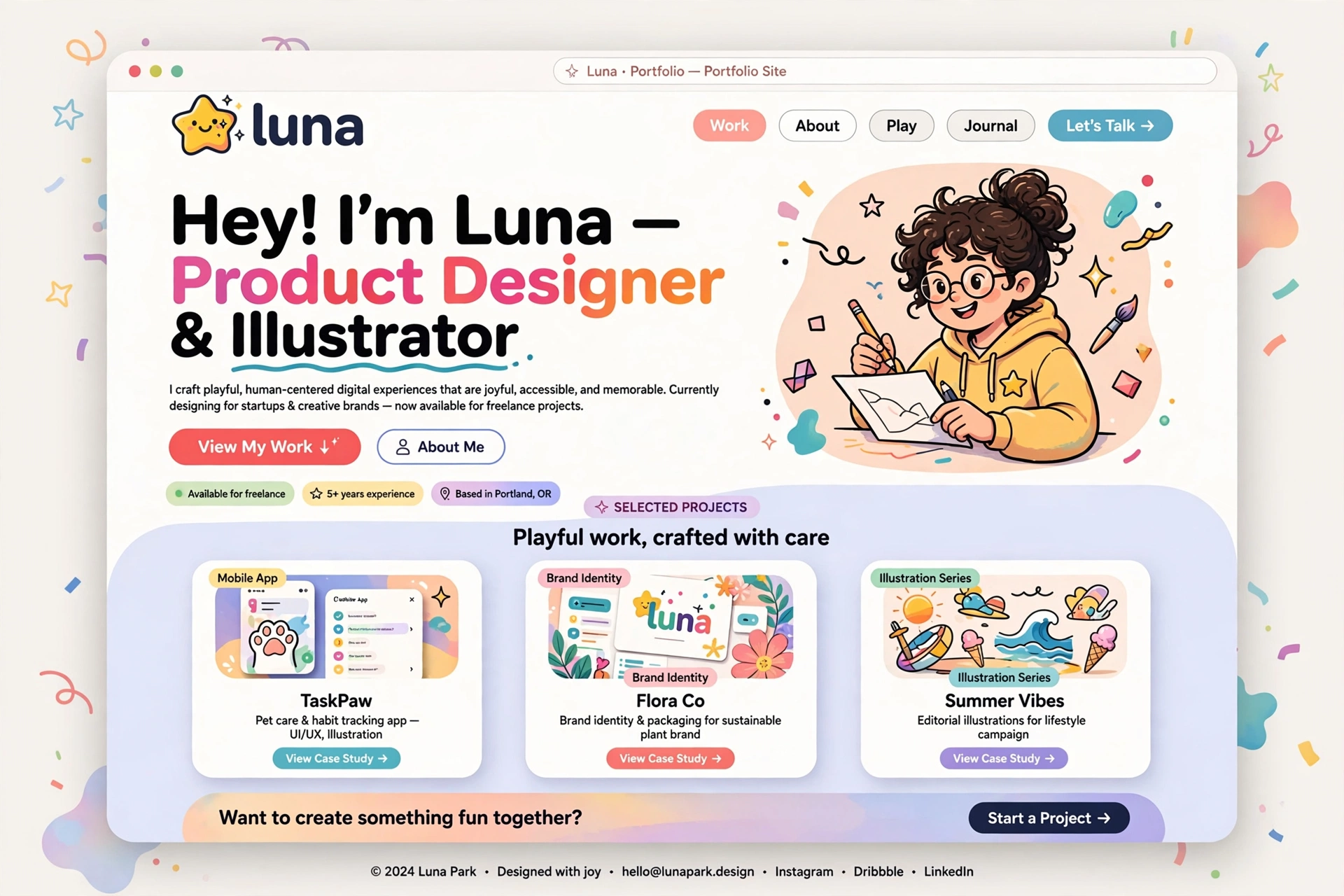
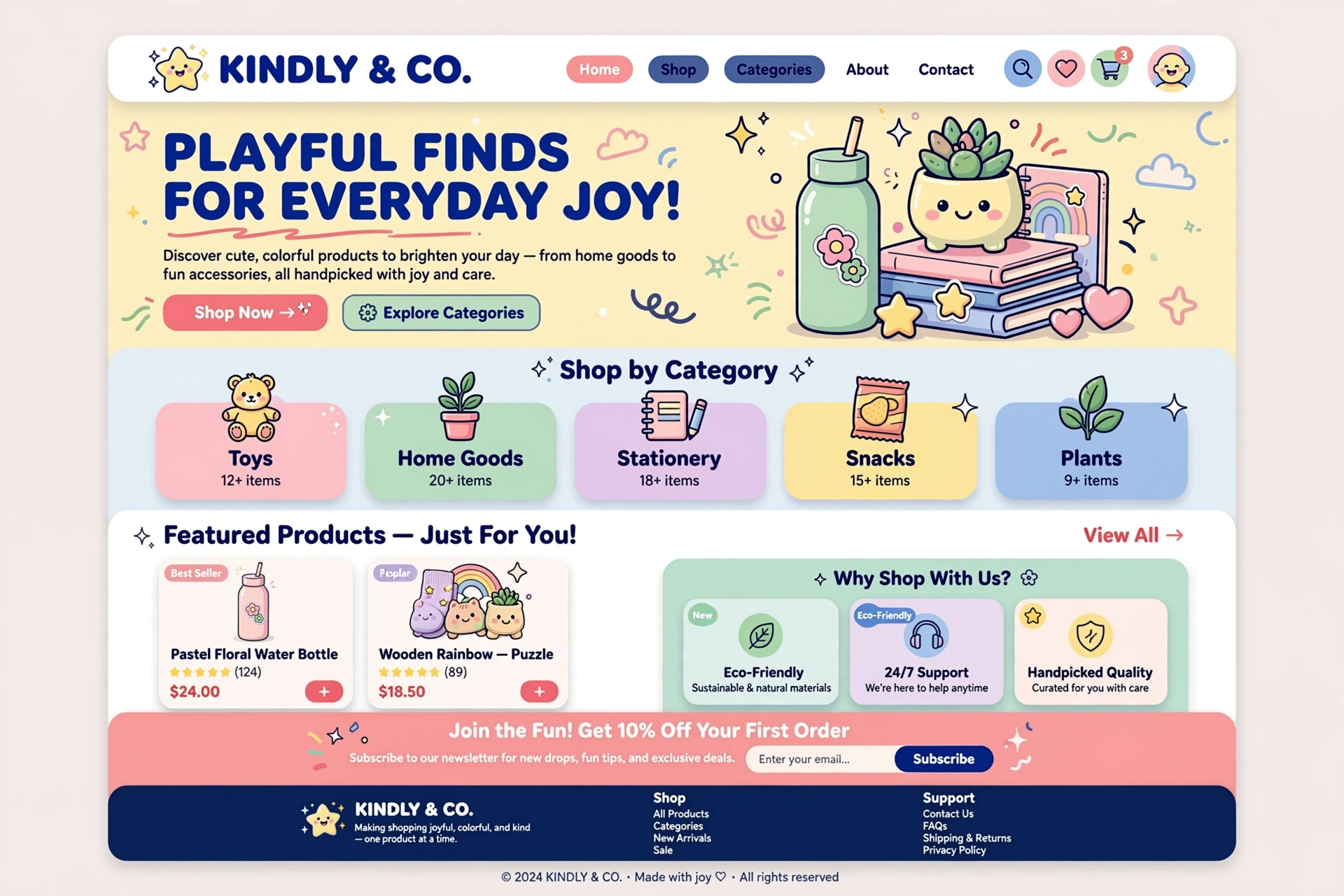
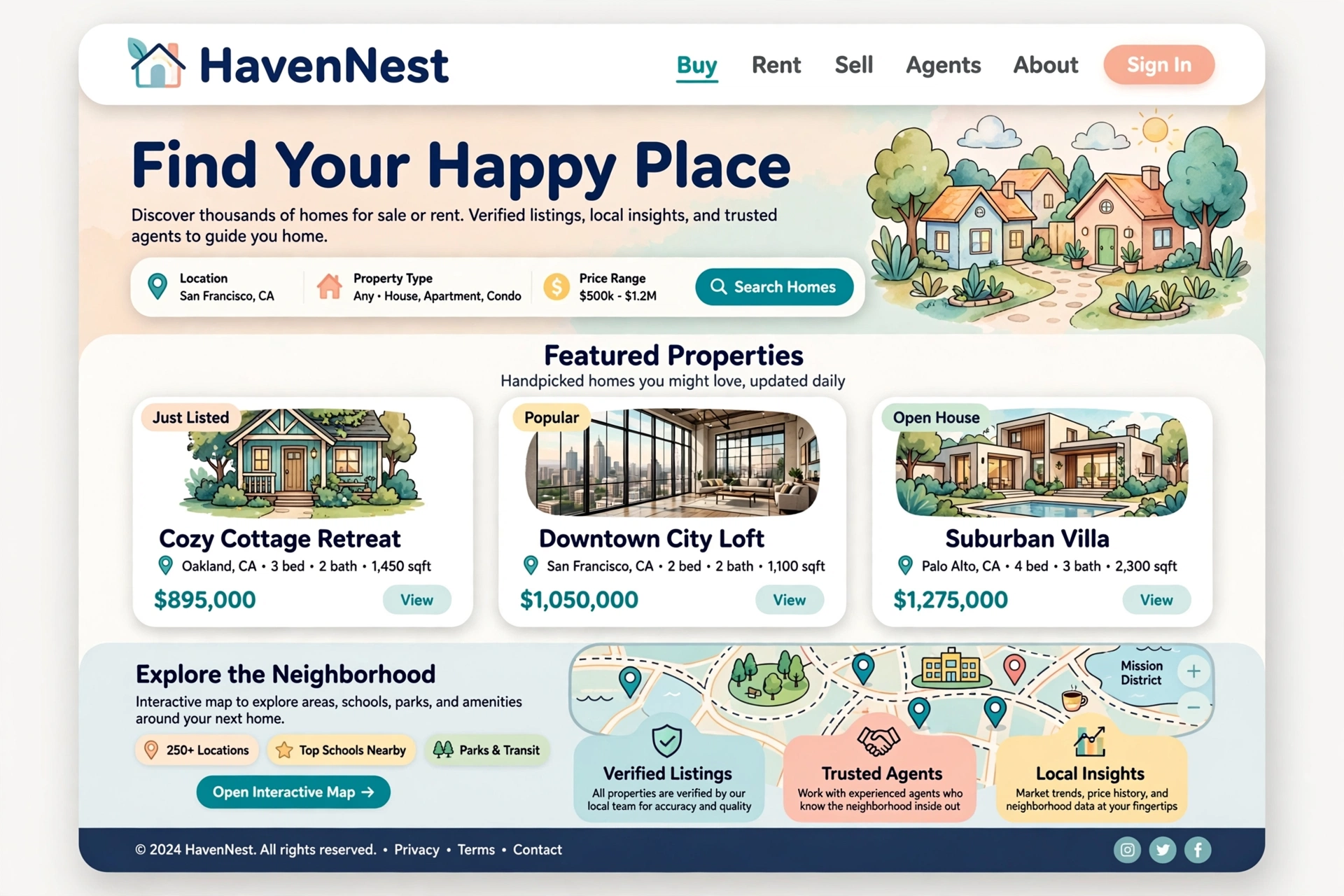
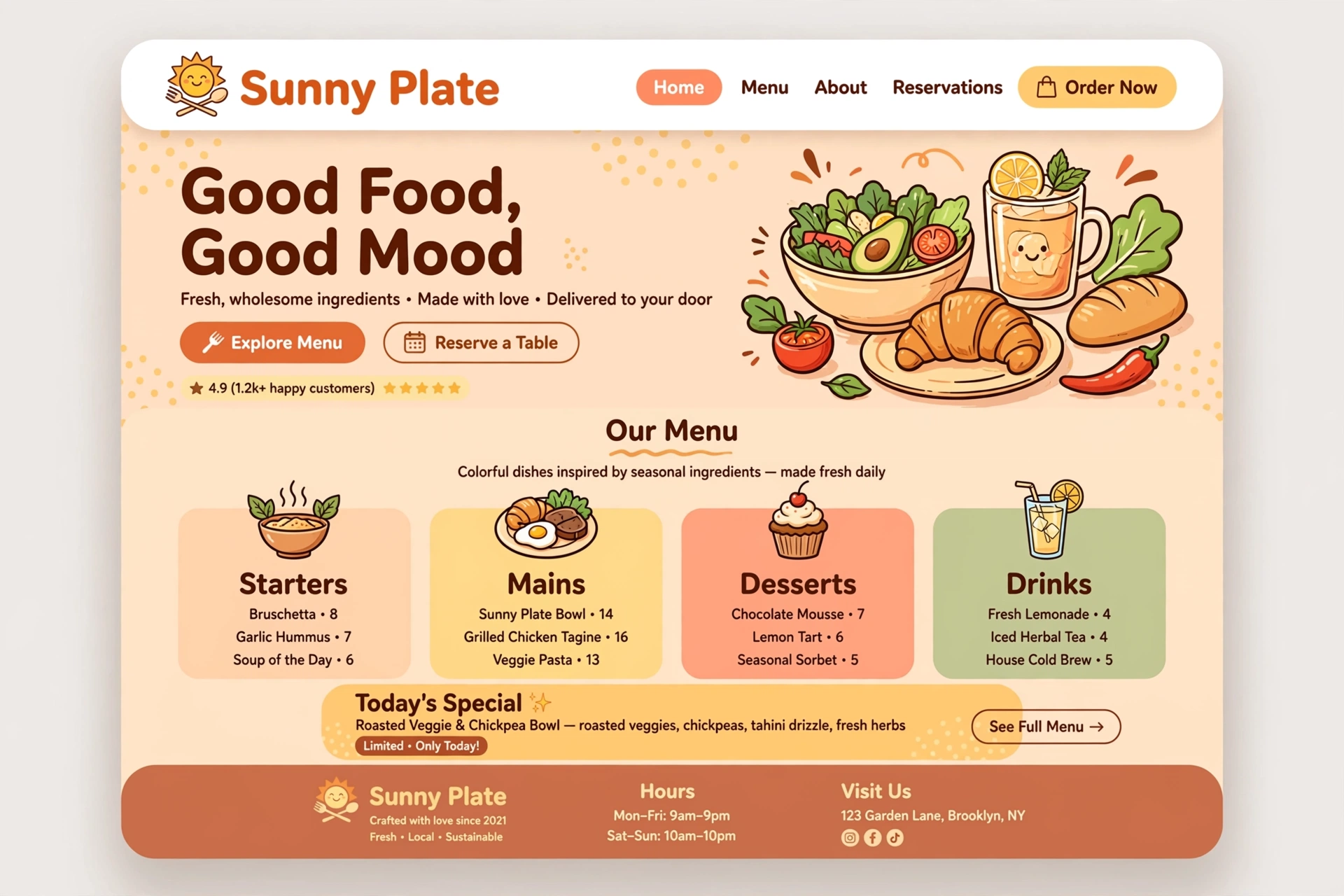
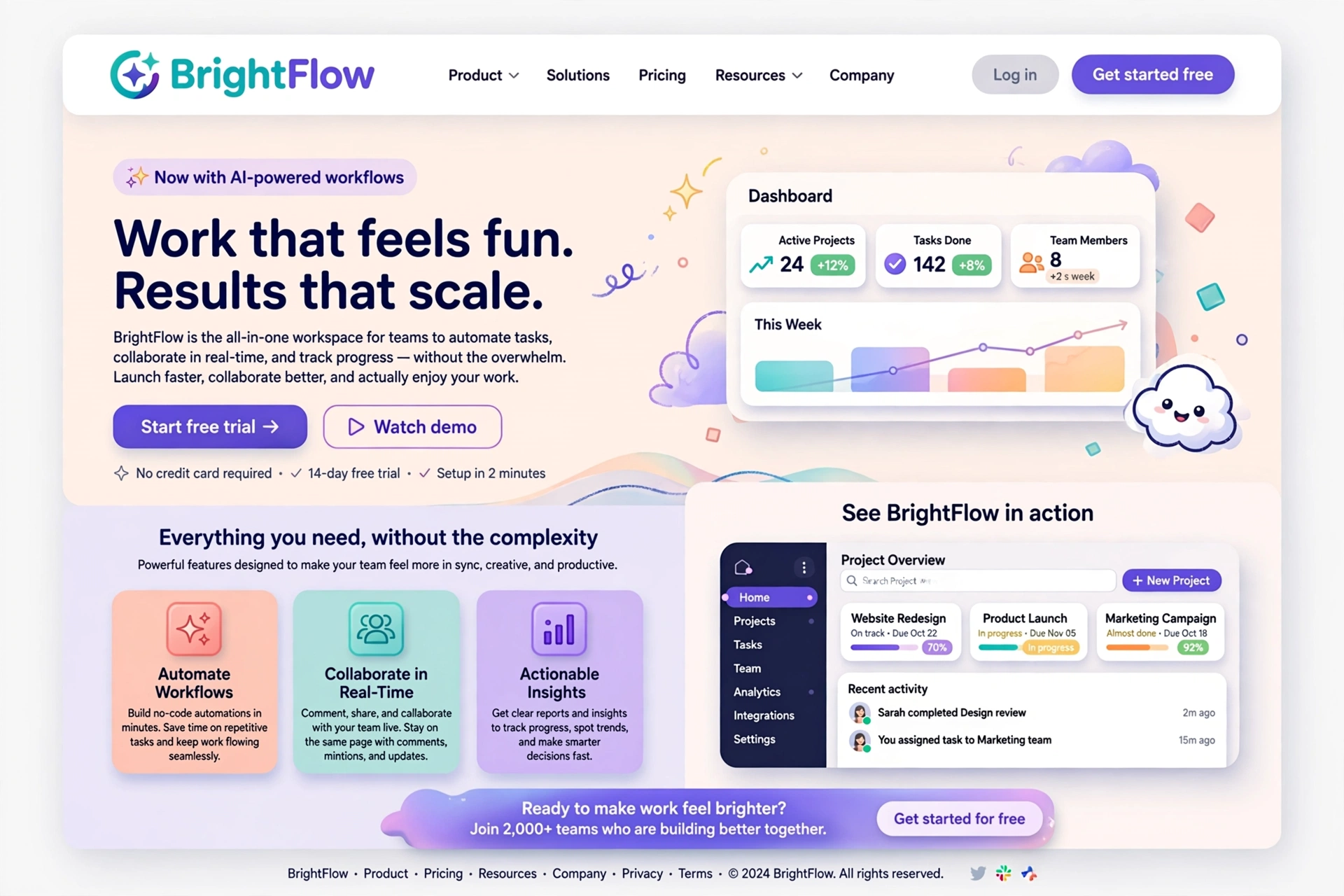
Playful and illustrative website designs use custom drawings, vibrant colors, and interactive animations to make browsing feel like an engaging game rather than just reading text. This approach humanizes brands by prioritizing storytelling, character design, and whimsy to leave a lasting, memorable impression on visitors.
Playful & Illustrative in Action
1. Core Characteristics
Playful and illustrative design is defined by a set of distinct visual and interactive characteristics that work together to create a friendly, engaging, and memorable experience.
The core characteristics include:
- ◆ Custom Vector and 3D Art — Bespoke illustrations tailored to the brand's identity.
- ◆ Immersive Micro-Interactions — Fluid, responsive movement in buttons and hovers.
- ◆ Bold, Non-Traditional Color Palettes — Bright, vibrant, and energetic color schemes.
- ◆ Fluid Layouts and Organic Shapes — Soft, rounded, and asymmetrical forms.
- ◆ Gamified Elements — Points, badges, and hidden rewards for exploration.
For Everyone:
Playful design is like a children's book illustration — it draws you in with color, character, and charm, making you feel happy and curious as you explore.
2. Custom Vector and 3D Art
Instead of standard stock photography, these sites use bespoke character designs, icons, and illustrated assets tailored exactly to the brand's identity. This creates a unique, recognizable visual language.
<!-- Custom SVG Character — Playful and Unique -->
            <svg viewBox="0 0 200 200" width="200" height="200">
            <!-- Character body -->
            <circle cx="100" cy="100" r="60"
            fill="#FF6B6B" stroke="#333" stroke-width="3"/>

            <!-- Eyes -->
            <circle cx="80" cy="90" r="12"
            fill="#FFF" stroke="#333" stroke-width="2"/>
            <circle cx="120" cy="90" r="12"
            fill="#FFF" stroke="#333" stroke-width="2"/>

            <!-- Pupils -->
            <circle cx="84" cy="92" r="5"
            fill="#333"/>
            <circle cx="124" cy="92" r="5"
            fill="#333"/>

            <!-- Smile -->
            <path d="M 70 115 Q 100 140 130 115"
            stroke="#333" stroke-width="4"
            stroke-linecap="round" fill="none"/>

            <!-- Rosy cheeks -->
            <circle cx="70" cy="110" r="10"
            fill="#FF9999" opacity="0.6"/>
            <circle cx="130" cy="110" r="10"
            fill="#FF9999" opacity="0.6"/>
            </svg>
For Everyone:
Custom vector art is like a signature illustration style — it makes your brand instantly recognizable and creates a personal connection with your audience.
3. Immersive Micro-Interactions
Buttons, hovers, and page elements respond with fluid movement, transforming mundane navigation into an interactive and tactile experience. Every click and hover feels responsive and alive.
/* Playful Micro-Interactions */
            /* Bouncy button — like a friendly jump */
            .btn-playful {
            transition: transform 0.3s cubic-bezier(0.34, 1.56, 0.64, 1);
            }
            .btn-playful:hover {
            transform: scale(1.15) rotate(-3deg);
            }

            /* Wobbly hover — playful and friendly */
            .wobble {
            transition: transform 0.2s ease;
            }
            .wobble:hover {
            transform: rotate(-5deg) scale(1.05);
            }

            /* Sparkle on click — pure joy */
            .sparkle:active {
            animation: sparkle 0.5s ease;
            }

            @keyframes sparkle {
            0% { transform: scale(1); }
            50% { transform: scale(1.3); }
            100% { transform: scale(1); }
            }

            /* Float animation — element lifts like a balloon */
            .float-playful {
            animation: floatUp 3s ease-in-out infinite;
            }
            @keyframes floatUp {
            0%, 100% { transform: translateY(0); }
            50% { transform: translateY(-12px); }
            }
For Everyone:
Micro-interactions are like a friendly high-five — they acknowledge your actions with warmth and enthusiasm, making every interaction feel delightful.
4. Bold, Non-Traditional Color Palettes
These designs often reject minimalist grayscale in favor of bright, vibrant, and highly energetic color schemes that evoke emotion and cheer. Color is used to express personality and create joy.
/* Playful, Vibrant Color Palette */
            :root {
            /* Primary — happy and energetic */
            --happy-yellow: #FFD93D;
            --playful-pink: #FF6B6B;
            --cool-teal: #4ECDC4;
            --bright-orange: #FF9F43;
            --soft-purple: #A29BFE;
            --sky-blue: #74B9FF;

            /* Background — light and warm */
            --bg-warm: #FFF8F0;
            --bg-playful: #FDF6E3;

            /* Text — dark but friendly */
            --text-playful: #2D3436;
            }

            /* Gradient combos for maximum joy */
            .gradient-sunset {
            background:
            linear-gradient(135deg, var(--happy-yellow), var(--bright-orange));
            }

            .gradient-ocean {
            background:
            linear-gradient(135deg, var(--cool-teal), var(--sky-blue));
            }

            .gradient-candy {
            background:
            linear-gradient(135deg, var(--playful-pink), var(--soft-purple));
            }
For Everyone:
Bold color palettes are like a box of crayons — they invite you to play, explore, and express yourself, creating a sense of joy and freedom.
5. Fluid Layouts and Organic Shapes
Designers frequently use soft, rounded, and asymmetrical shapes instead of rigid grids, giving the website a relaxed and dynamic feel. This makes the page feel more natural and inviting.
/* Fluid, Organic Layout */
            .playful-container {
            display: grid;
            grid-template-columns: 1fr 0.7fr 1.3fr;
            gap: 1.5rem;
            padding: 2rem;
            }

            /* Organic shapes — blobs and curves */
            .blob {
            border-radius: 40% 60% 50% 50% / 50% 40% 60% 50%;
            background: var(--happy-yellow);
            padding: 2rem;
            position: relative;
            z-index: 1;
            }

            .blob-2 {
            border-radius: 30% 70% 60% 40% / 40% 50% 50% 60%;
            background: var(--playful-pink);
            padding: 2rem;
            transform: rotate(-5deg);
            }

            /* Asymmetrical, relaxed grid */
            .relaxed-grid {
            display: grid;
            grid-template-columns: 2fr 1fr;
            gap: 1rem;
            }

            .relaxed-item {
            border-radius: 50% 20% 50% 20% / 20% 50% 20% 50%;
            padding: 1.5rem;
            background: var(--cool-teal);
            color: #fff;
            }
For Everyone:
Fluid layouts are like a comfortable living room — the furniture isn't perfectly aligned, but it feels cozy, relaxed, and welcoming rather than stiff and formal.
6. Common Design Styles
Playful and illustrative design encompasses several distinct visual approaches, each with its own personality and charm.
Flat & Vector Art
Clean, 2D shapes with solid colors, making the website look like a modern animated storybook. This style is versatile, scalable, and universally appealing.
Isometric & 3D Illustration
Gives flat shapes depth, creating a fun, tactile "miniature world" for the user to explore. This style adds a sense of discovery and wonder.
Doodle & Hand-Drawn
Features sketchy, imperfect lines that give the site an authentic, highly personal, and human touch. It feels like something made by hand.
<!-- Flat Vector Style -->
            <div class="flat-vector">
            <svg viewBox="0 0 100 100">
            <circle cx="50" cy="50" r="40" fill="#FF6B6B"/>
            <circle cx="50" cy="50" r="25" fill="#FFD93D"/>
            <circle cx="50" cy="50" r="10" fill="#4ECDC4"/>
            </svg>
            <p>Flat vector — clean and bold.</p>
            </div>

            <!-- Doodle Style — sketchy, imperfect -->
            <div class="doodle">
            <p style="font-family: 'Comic Sans MS', cursive; font-size: 1.2rem; transform: rotate(-2deg);">
            ✏️ Hand-drawn doodle with sketchy lines!
            </p>
            </div>
For Everyone:
Each illustrative style is like a different art medium — watercolors, pencils, or digital paint — each with its own unique texture and personality.
7. Gamified Elements & User Rewards
Incorporates points, badges, or hidden "Easter eggs" that reward the user for clicking around the page. This encourages exploration and makes browsing feel like a game.
<!-- Gamified Interaction Elements -->

            <!-- Points counter — reward for exploration -->
            <div class="points-counter">
            <span class="points-label">⭐ Points Earned</span>
            <span class="points-value" id="points">0</span>
            </div>

            <!-- Hidden Easter egg — click to discover -->
            <button class="easter-egg"
            onclick="this.innerText='🎉 You found a secret!'">
            🥚 Click me!
            </button>

            <!-- Badge system — collect achievements -->
            <div class="badge-collection">
            <span class="badge">🏆 Explorer</span>
            <span class="badge locked">🔒 Clicker</span>
            <span class="badge locked">🔒 Scroller</span>
            </div>

            <!-- Progress bar — level up! -->
            <div class="level-progress">
            <label>Level 1 → Level 2</label>
            <div class="progress-bar">
            <div class="progress-fill" style="width: 60%;">60%</div>
            </div>
            </div>
For Everyone:
Gamified elements are like a treasure hunt — they make you curious and excited to explore every corner, rewarding you with small delights along the way.
8. Why Brands Use Playful Design
Playful and illustrative design offers powerful benefits that make it a strategic choice for brands of all sizes.
User Engagement
Playful elements encourage visitors to stay on the page longer, significantly lowering bounce rates. The more time users spend, the more likely they are to convert.
Memorability
Unique, story-driven visuals ensure your brand stands out from competitors relying on generic corporate templates. People remember emotions and stories.
Simplifies Complex Ideas
Difficult concepts, data, or product features become easier and more enjoyable for users to digest when explained through sequential illustrations.
Emotional Connection
Whimsy and humor build trust and rapport, transforming visitors from casual viewers into loyal customers.
For Everyone:
Playful design is a superpower — it makes your brand feel human, approachable, and unforgettable in a world of sameness.
9. Accessibility in Playful Design
While playful design is about fun and whimsy, it must remain accessible to everyone. Always include clear text alternatives for images so visually impaired users can understand the site's content and context.
<!-- Accessible Illustrations -->

            <!-- SVG with ARIA and title -->
            <svg role="img"
            aria-labelledby="illustration-title"
            viewBox="0 0 200 200">
            <title id="illustration-title">
            A playful character waving hello
            </title>
            <!-- Illustration content -->
            <circle cx="100" cy="100" r="60" fill="#FF6B6B"/>
            </svg>

            <!-- Alt text for images -->
            <img
            src="playful-character.webp"
            alt="A playful character with a bright smile, wearing a yellow hat and waving hello"
            loading="lazy"
            />

            <!-- Descriptive captions for complex illustrations -->
            <figure>
            <img src="flowchart-illustration.webp"
            alt="Illustrated flowchart showing the user journey from discovery to purchase"/>
            <figcaption>
            Figure 1: An illustrated guide to the user journey — discover, explore, decide, purchase.
            </figcaption>
            </figure>
For Everyone:
Accessibility in playful design is like a friendly welcome to everyone — it ensures that no one is left out of the fun, regardless of their abilities.
10. Best Practices & Implementation
To implement a playful and illustrative design successfully, follow these best practices:
- ◆ Balance functionality: Animations and drawings should enhance the user journey, not obstruct navigation or slow down loading.
- ◆ Maintain accessibility: Always include clear text alternatives for images so all users can understand the content.
- ◆ Keep illustrations consistent: Use a cohesive style across all assets to build a recognizable brand identity.
- ◆ Optimize performance: Use vector formats (SVG) and compress images to ensure fast load times.
- ◆ Test animations: Ensure micro-interactions work smoothly across devices and browsers.
-
◆
Respect reduced motion: Use
prefers-reduced-motionto disable animations for users who need it.
<!-- Playful Illustrative Template -->
            <!DOCTYPE html>
            <html>
            <head>
            <meta charset="utf-8">
            <title>Playful Site</title>
            </head>
            <body>

            <!-- Hero with custom character -->
            <header class="playful-hero">
            <div class="hero-content">
            <h1>Welcome to the Playground!</h1>
            <p>Where every click is an adventure.</p>
            <button class="btn-playful">
            🎮 Start Exploring
            </button>
            </div>

            <!-- Custom character SVG -->
            <div class="character">
            <svg viewBox="0 0 200 200" width="200">
            <circle cx="100" cy="100" r="60" fill="#FF6B6B"/>
            <circle cx="70" cy="90" r="12" fill="#FFF"/>
            <circle cx="130" cy="90" r="12" fill="#FFF"/>
            <circle cx="85" cy="92" r="5" fill="#333"/>
            <circle cx="125" cy="92" r="5" fill="#333"/>
            <path d="M 70 115 Q 100 140 130 115" stroke="#333" stroke-width="4" fill="none" stroke-linecap="round"/>
            </svg>
            </div>
            </header>

            <!-- Feature section with organic shapes -->
            <section class="features">
            <div class="feature blob">
            <h2>🎨 Custom Art</h2>
            <p>Every illustration is made just for you.</p>
            </div>
            <div class="feature blob-2">
            <h2>✨ Interactive Fun</h2>
            <p>Click, hover, explore — joy is everywhere.</p>
            </div>
            </section>

            <footer>
            <p>© Playful Studio — Made with 💛</p>
            </footer>

            </body>
            </html>
For Everyone:
Implementation is about bringing joy to the screen — like a playground designer, you're creating a space where people feel happy, curious, and free to explore.
11. Inspirations & Examples of Playful & Illustrative Design
The best way to understand the power of playful and illustrative design is to see it in action. Here are some real-world inspirations that showcase how brands use custom illustrations, vibrant colors, and interactive elements to create joyful, memorable digital experiences.
Mailchimp — Playful Character Design
Mailchimp is the pioneer of playful brand identity — featuring custom illustrations, quirky characters, and a vibrant color palette that makes email marketing feel friendly and approachable.
Visit MailchimpDuolingo — Gamified Learning
Duolingo's website and app are a masterclass in gamification — with its iconic green owl mascot, reward systems, and playful interactions that make language learning feel like a game.
Visit DuolingoDribbble — Illustrative Design Community
Dribbble is the home of creative illustrators — its own platform uses playful, colorful design to showcase the work of the design community, making it a constant source of inspiration.
Visit DribbbleDropbox — Illustration-First Brand
Dropbox famously uses custom illustrations and playful characters to humanize a cloud storage product. Their visual language is colorful, friendly, and instantly recognizable.
Visit DropboxFigma — Playful UI Kits
The Figma community is full of playful, illustrative UI kits — from 3D character packs to vibrant design systems. A great resource for finding inspiration and ready-made assets.
Explore Figma CommunityHumaaans — Custom Illustration Libraries
Humaaans and Open Peeps are free illustration libraries that let you mix and match characters, poses, and elements to create playful, custom illustrations without starting from scratch.
Visit HumaaansFor Everyone:
Playful inspiration is everywhere — from the apps we use daily to the vibrant illustrations in children's books. The key is to embrace joy and curiosity and let that spirit guide your design choices.
12. Future Trends & Evolution of Playful & Illustrative Design
As technology evolves and user expectations shift, playful and illustrative design is embracing new possibilities. Here are the key trends shaping the future of this joyful, expressive design approach.
AI‑Generated Illustrations & Characters
AI tools like Midjourney, DALL-E, and Stable Diffusion are enabling designers to generate unique, custom illustrations at scale. The future will see AI becoming a creative collaborator, helping brands develop distinctive visual languages faster than ever.
Interactive 3D & Augmented Reality
Playful design is moving into 3D space and AR — users will be able to interact with characters and environments in real-time, blurring the line between digital and physical. This creates immersive, memorable brand experiences.
Responsive & Adaptive Playfulness
Playful elements will become smarter and more adaptive — animations, characters, and interactions will respond to user behaviour, time of day, and even mood. The experience will feel personalized and alive.
Motion Design & Micro-Animation
Playful interfaces will feature increasingly sophisticated motion — characters that react to cursor movement, menus that bounce with personality, and animations that tell stories. Motion will be a core part of the brand voice.
Accessible Playfulness
The future of playful design is inclusive and accessible — ensuring that everyone, regardless of ability, can experience the joy. This includes clear alt text, high contrast, and motion controls for users who need them.
For Everyone:
The future is playful, inclusive, and human. As technology continues to evolve, the most successful brands will be those that use it to create joy, build emotional connections, and make people smile — because in a digital world, humanity is the ultimate differentiator.
Got questions?
Frequently Asked Questions
Everything you need to know about Playful & Illustrative design — from core concepts to implementation.
Playful & Illustrative web design is a joyful design approach that uses custom drawings, vibrant colors, and interactive animations to make browsing feel like an engaging game rather than just reading text. It humanizes brands by prioritizing storytelling, character design, and whimsy to leave a lasting, memorable impression on visitors.
It transforms digital experiences into adventures that evoke curiosity, delight, and emotional connection — making brands feel approachable, friendly, and unforgettable.
The key characteristics include custom vector and 3D art — bespoke illustrations tailored to the brand's identity that create a unique, recognizable visual language. Immersive micro-interactions — fluid, responsive movement in buttons and hovers that make interfaces feel alive and responsive.
Bold, non-traditional color palettes — bright, vibrant, and energetic schemes that evoke emotion and cheer. Fluid layouts and organic shapes — soft, rounded, and asymmetrical forms instead of rigid grids for a relaxed feel. And gamified elements — points, badges, or hidden 'Easter eggs' that reward users for exploring the page and make browsing feel like a game.
Unlike Corporate & Professional design which prioritises structure and trust, Playful & Illustrative design prioritises joy, emotion, and human connection. Unlike Creative & Bold which focuses on visual impact through typography and colour, Playful design focuses on character, storytelling, and whimsy.
It's the most human, approachable, and emotionally resonant of all design styles — using custom illustrations and interactive elements to make brands feel friendly, approachable, and memorable. It's about creating a feeling, not just a visual identity.
Playful & Illustrative design is ideal for children's brands, educational platforms, creative agencies, lifestyle and wellness brands, consumer products, startups, and any brand that wants to feel approachable, friendly, and human. It works best when the brand identity values joy, creativity, and emotional connection over formality.
However, it may not be suitable for conservative industries like law, finance, or traditional corporate sectors where seriousness and trust are paramount. For those, styles like Corporate & Professional or Monochrome & Elegant would be more appropriate.
Three main illustration styles dominate playful design. Flat & vector art uses clean, 2D shapes with solid colors, making the website look like a modern animated storybook — it's versatile, scalable, and universally appealing.
Isometric & 3D illustration gives flat shapes depth, creating a fun, tactile 'miniature world' for users to explore — adding a sense of discovery and wonder. Doodle & hand-drawn features sketchy, imperfect lines that give the site an authentic, highly personal, and human touch — it feels like something made by hand. Each style has its own personality and charm, and the choice depends on the brand's character.
Making playful design accessible requires several considerations. Always include clear text alternatives (alt text) for all images and illustrations so visually impaired users can understand the content. Use semantic HTML and proper ARIA labels for screen readers.
Respect user motion preferences with the prefers-reduced-motion media query. Maintain sufficient color contrast for readability — ensure text is legible even on colourful backgrounds. Ensure keyboard navigability for all interactive elements. Playful design should be inclusive — everyone should be able to experience the joy, regardless of their abilities.
Best practices include balancing functionality — animations and drawings should enhance the user journey, not obstruct navigation or slow down loading. Maintaining accessibility — always include clear text alternatives for images. Keeping illustrations consistent — use a cohesive style across all assets to build a recognizable brand identity.
Optimizing performance — use vector formats like SVG and compress images for fast load times. Testing animations — ensure micro-interactions work smoothly across devices and browsers. And respecting reduced motion — use prefers-reduced-motion to disable animations for users who need it. Playful design should be joyful, not overwhelming.
Excellent sources of inspiration include Mailchimp — the pioneer of playful brand identity with custom illustrations, quirky characters, and a vibrant colour palette. Duolingo — a masterclass in gamification with its iconic green owl mascot, reward systems, and playful interactions that make language learning feel like a game.
Dribbble — the home of creative illustrators, constantly showcasing playful, colourful work. Dropbox — uses custom illustrations and playful characters to humanize a technical product. The Figma community — full of playful, illustrative UI kits and design systems. And Humaaans — a free illustration library that lets you mix and match characters and poses to create custom illustrations without starting from scratch.
Still have questions? Let's talk
Ready to play?
Let's apply these playful and illustrative design principles to your next project and create a colorful, engaging, and memorable digital experience that brings joy to your audience.
Start your project