

Editorial and Luxury web designs blend the visual principles of print magazines with premium brand storytelling. They prioritize aesthetic immersion, utilizing bold typography, intentional whitespace, and high-quality visuals to guide users through a narrative. These sites act as a "lookbook," selling a lifestyle and an experience rather than just pushing products.
Editorial & Luxury in Action
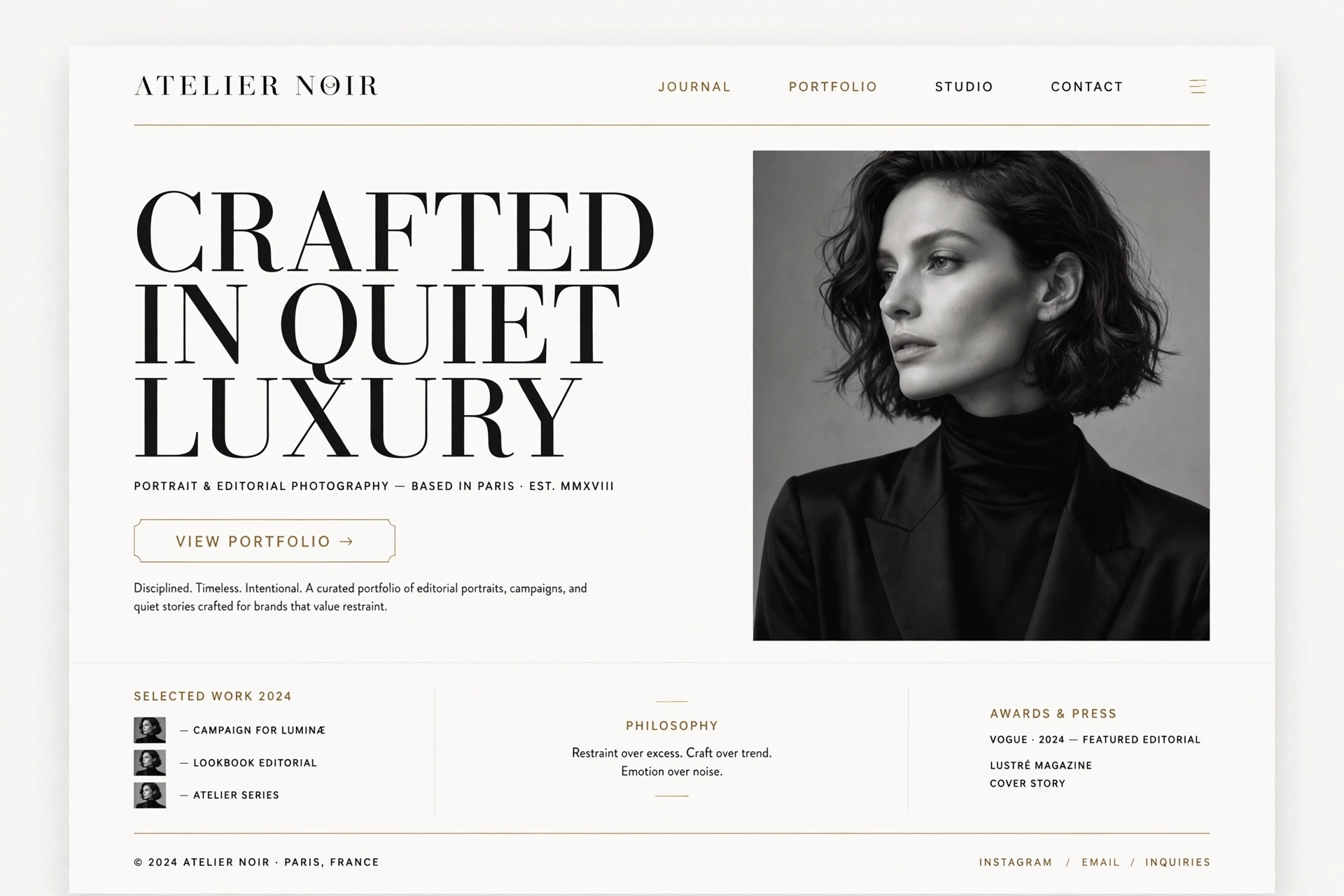
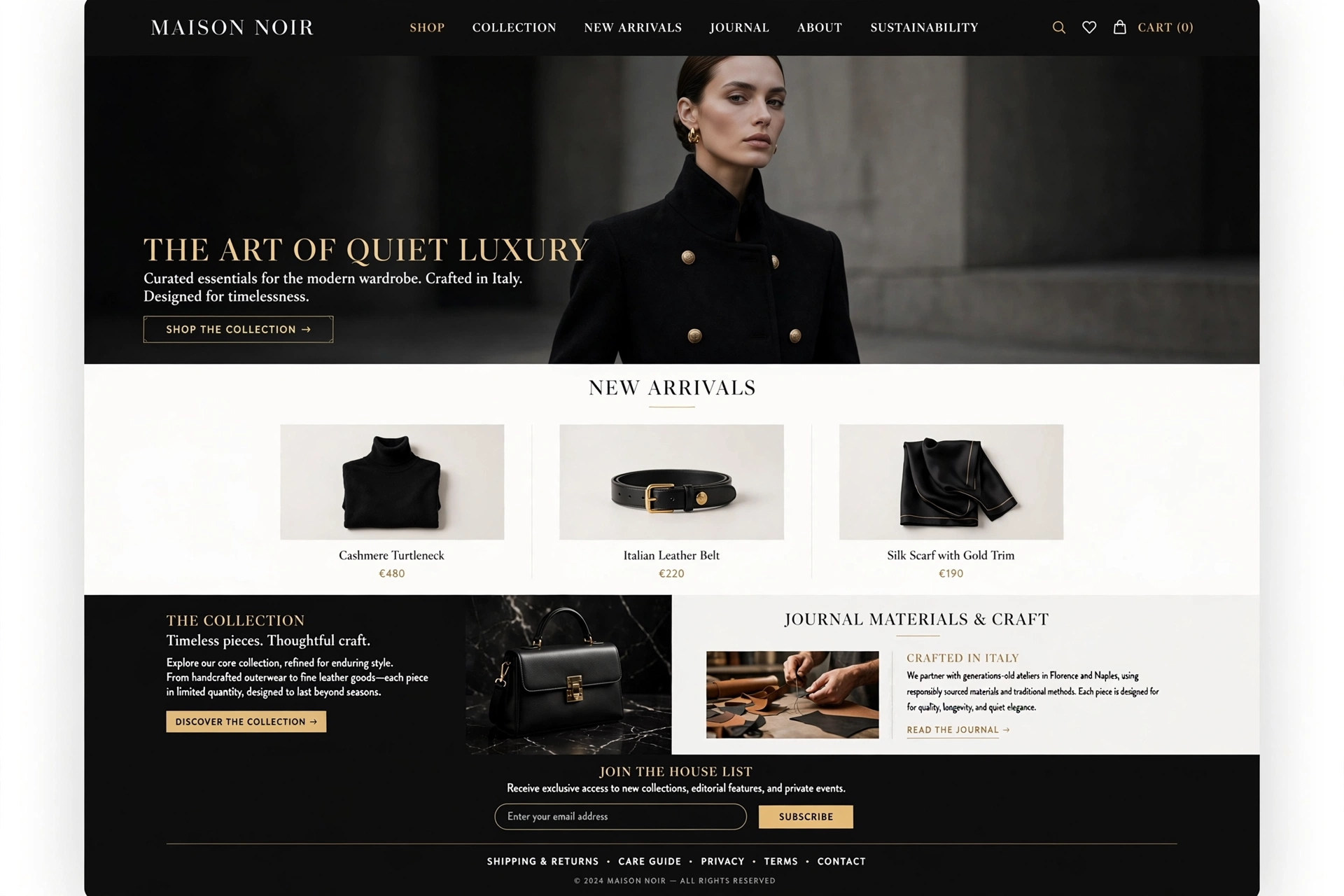
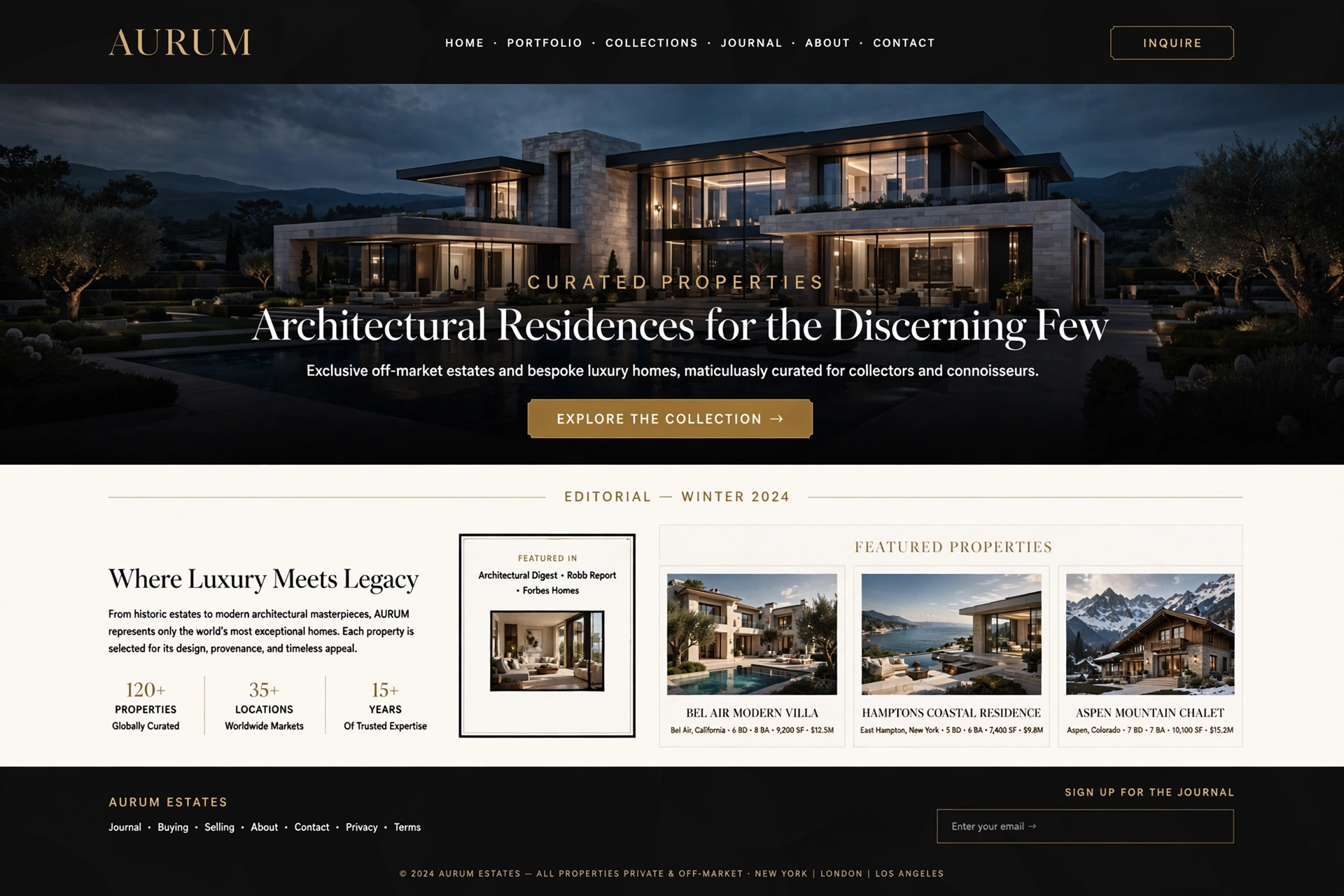
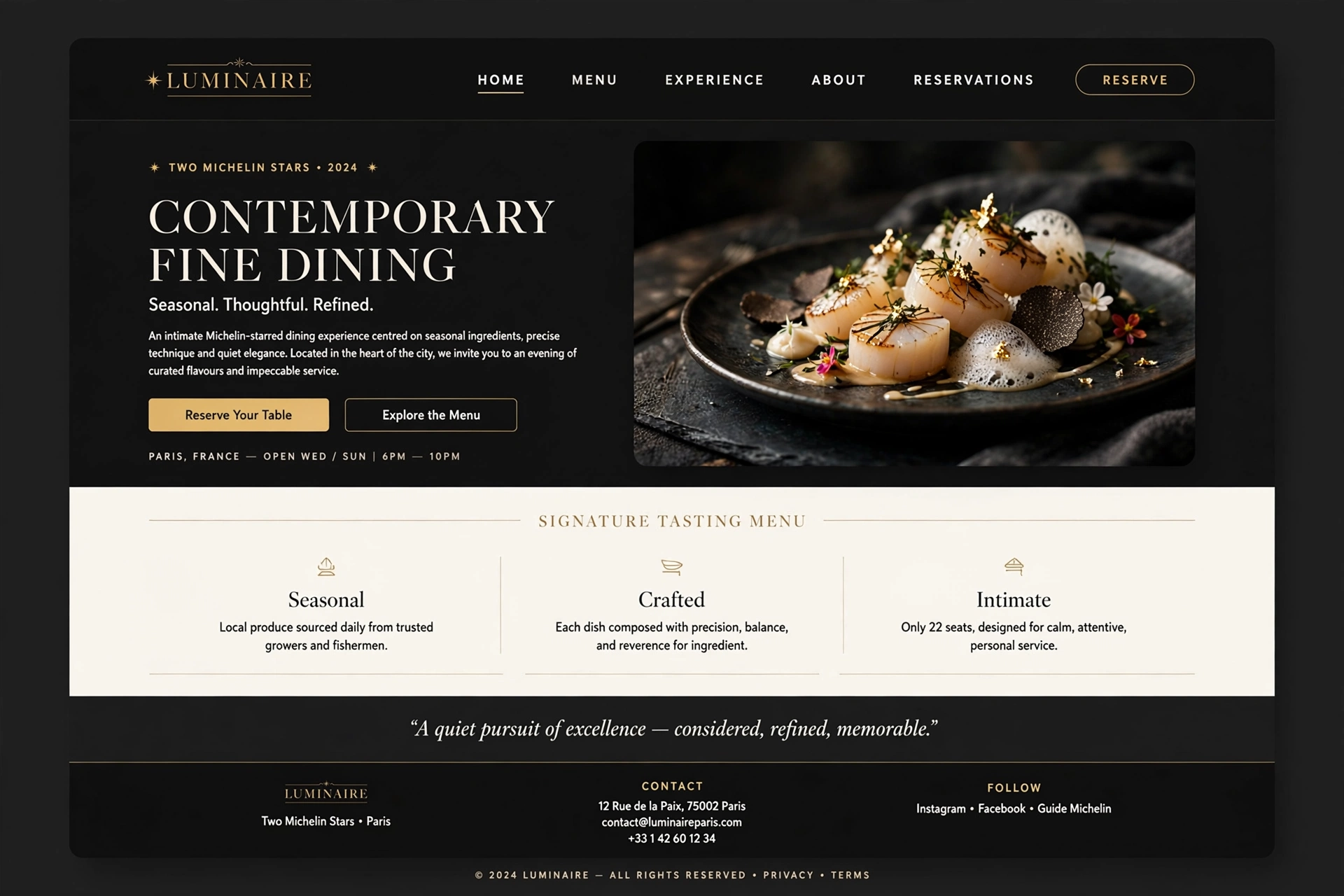
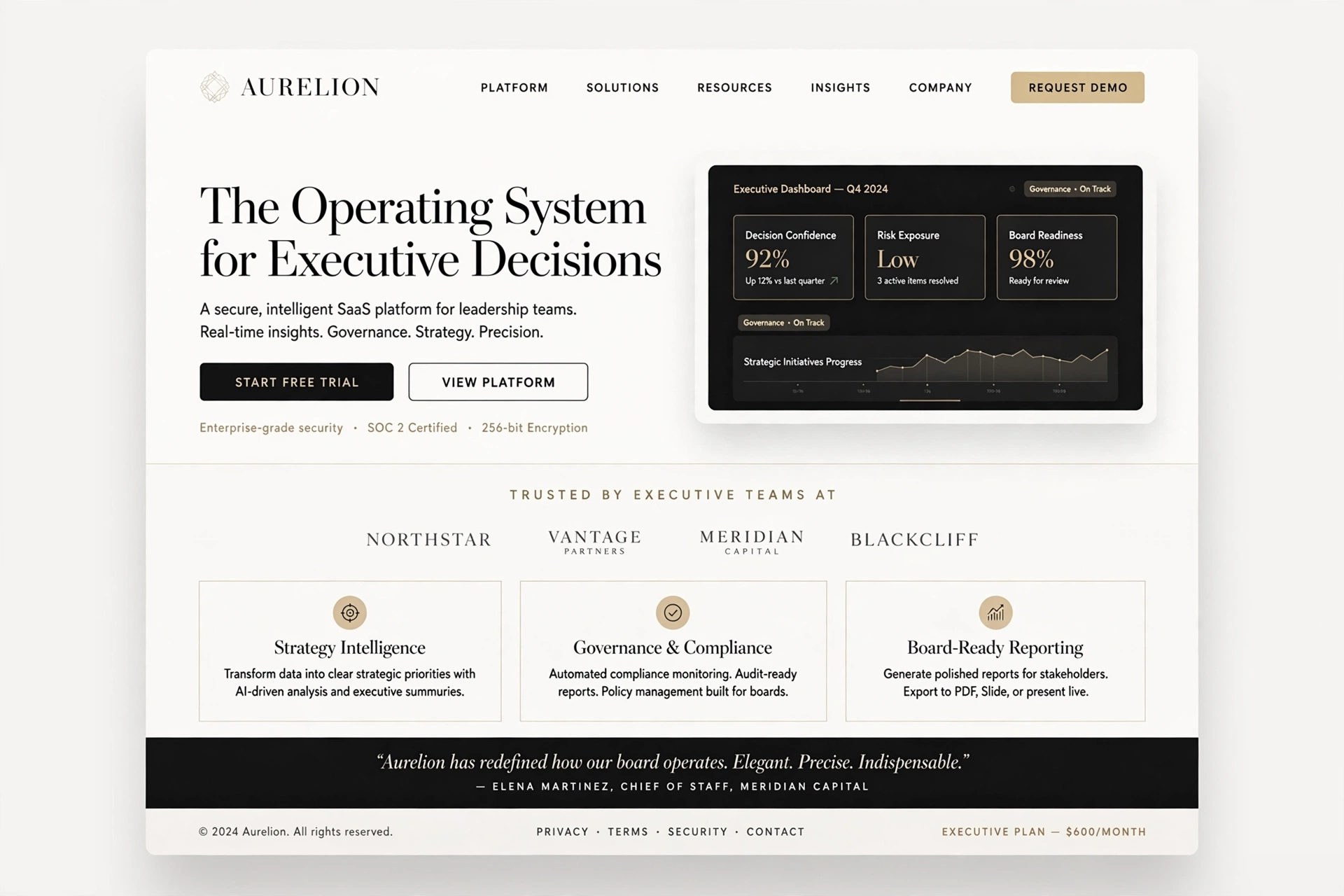
1. Core Design Principles
The core design philosophy for editorial and luxury aesthetics is broken down into several specific, actionable components that together create a cohesive, premium experience.
Storytelling Over Selling
Instead of throwing specs and "Add to Cart" buttons at visitors immediately, the experience builds a mood, heritage, or aesthetic first. The user is invited into a narrative that creates desire before presenting any commercial ask.
Intentional Whitespace
Generous margins and breathing room allow high-definition photography to shine. It feels expensive because it is not crowded. Whitespace in luxury design is a signal of confidence — the brand doesn't need to fill every pixel to prove its value.
Editorial Layouts
Content relies on multilayered compositions reminiscent of print media (e.g., Vogue or GQ) rather than standard digital grid templates. This creates a sense of depth, curation, and craftsmanship that feels both premium and timeless.
For Everyone:
Editorial design is like a luxury magazine — every page is curated, every image is intentional, and the reader is taken on a journey rather than just being sold to.
2. Typography That Speaks
In editorial and luxury design, typography carries the brand's voice. It is not just about legibility — it's about presence, elegance, and authority.
High Contrast & Hierarchy
Large, dramatic headings contrast with perfectly kerned, highly legible body text. The contrast between bold and refined creates visual interest and guides the reader through the content with deliberate pacing.
Curated Font Families
Strict adherence to one or two custom or premium serif/sans-serif fonts creates a cohesive, clean personality. Serif fonts like Bodoni, Didot, or Garamond evoke heritage and sophistication, while refined sans-serifs like Helvetica or Inter offer modern clarity.
Generous Letter Spacing
Generous tracking (letter-spacing) and line height add to the overall feeling of calm and prestige. This breathing room makes the text feel more considered and premium.
/* Editorial Typography System */
            :root {
            --font-display: 'Cormorant Garamond', 'Times New Roman', serif;
            --font-body: 'Inter', -apple-system, sans-serif;

            /* Dramatic heading scale */
            --fs-hero: clamp(3rem, 6vw, 6rem);
            --fs-heading: clamp(2rem, 3vw, 3.5rem);
            --fs-body: clamp(1rem, 1.2vw, 1.25rem);

            /* Generous spacing */
            --letter-spacing-heading: -0.02em;
            --letter-spacing-body: 0.02em;
            --line-height-body: 1.8;
            }

            .hero-title {
            font-family: var(--font-display);
            font-size: var(--fs-hero);
            font-weight: 500;
            letter-spacing: var(--letter-spacing-heading);
            line-height: 1.05;
            }

            .body-text {
            font-family: var(--font-body);
            font-size: var(--fs-body);
            letter-spacing: var(--letter-spacing-body);
            line-height: var(--line-height-body);
            max-width: 65ch;
            }
For Everyone:
Typography in editorial design is like the voice of a seasoned narrator — it commands attention, sets the mood, and guides you through the story with grace and authority.
3. Visual Content & Media
The quality of the visual content determines the success of an editorial or luxury website. Imagery is not decoration — it is the primary storytelling medium.
Cinematic Imagery
Images are curated with stylized tones, often leaning into lifestyle-driven compositions rather than basic product catalogs. Every photograph is treated with the same care as a film frame.
Mixed Media
Websites often integrate grainy backgrounds, rich textures, or high-definition background videos to immerse the user in the brand's atmosphere. These elements add depth and tactility to the digital experience.
<!-- Cinematic hero with grain overlay -->
            <div class="hero-cinematic">
            <img
            src="hero-cinematic.webp"
            alt="Luxury lifestyle"
            loading="lazy"
            decoding="async"
            class="hero-image">
            <div class="grain-overlay"></div>
            <div class="hero-content">
            <h1 class="display">Timeless Elegance</h1>
            </div>
            </div>

            <!-- CSS Grain Overlay -->
            <style>
            .grain-overlay {
            position: absolute;
            inset: 0;
            background-image: url("data:image/svg+xml,%3Csvg viewBox='0 0 256 256' xmlns='http://www.w3.org/2000/svg'%3E%3Cfilter id='noise'%3E%3CfeTurbulence type='fractalNoise' baseFrequency='0.9' numOctaves='4' stitchTiles='stitch'/%3E%3C/filter%3E%3Crect width='100%25' height='100%25' filter='url(%23noise)' opacity='1'/%3E%3C/svg%3E");
            opacity: 0.06;
            pointer-events: none;
            mix-blend-mode: multiply;
            }
            </style>
For Everyone:
Visual content in editorial design is like the cover of a luxury magazine — it must be arresting, aspirational, and beautifully composed.
5. Common Applications
The editorial and luxury aesthetic is highly versatile and applies across a range of industries and use cases.
Editorial Platforms
Digital magazines and brand journals use narrative-focused structures to help readers digest shifting perspectives. These platforms position the brand as a thought leader and tastemaker.
Premium E-Commerce
High-end fashion, jewelry, and furniture stores keep the brand's luxurious feeling intact all the way to the checkout screen. The checkout process is as elegant as the product pages.
High-End Services & Travel
Luxury hotels, architectural firms, and private concierge services sell the feeling of arrival through striking background visuals and carefully considered micro-copy. The experience begins before the user even visits the physical location.
For Everyone:
Editorial design is a mindset, not a template. It's about treating every interaction as a curated experience that builds brand affinity and emotional connection.
6. Editorial Layout Systems
Editorial layouts draw from print design traditions while embracing the dynamic possibilities of the web. They are characterized by asymmetry, layering, and intentional rhythm.
/* Editorial Grid — asymmetrical, layered */
            .editorial-grid {
            display: grid;
            grid-template-columns: repeat(12, 1fr);
            gap: 1.5rem;
            max-width: 1440px;
            margin: 0 auto;
            padding: 2rem;
            }

            /* Feature article spans 8 columns, offset */
            .feature-article {
            grid-column: 2 / 10;
            grid-row: span 2;
            padding: 2rem;
            border-right: 2px solid var(--accent);
            }

            /* Sidebar content — narrow, refined */
            .sidebar {
            grid-column: 10 / 13;
            padding: 1rem 0;
            font-size: 0.9rem;
            letter-spacing: 0.03em;
            color: var(--fg-mute);
            }

            /* Pull quote — bleeding into the grid */
            .pull-quote {
            grid-column: 3 / 11;
            font-family: var(--font-display);
            font-size: clamp(2rem, 3vw, 3.5rem);
            font-style: italic;
            padding: 2rem 0;
            border-top: 1px solid var(--line);
            border-bottom: 1px solid var(--line);
            }
For Everyone:
Editorial layouts are like a well-designed magazine spread — every element has its place, creating a rhythm and flow that guides the reader through the content naturally.
7. Brand Storytelling & Narrative
Editorial and luxury design is fundamentally about storytelling. Every element — from the copy to the imagery to the interactions — works together to tell a cohesive brand story.
The narrative often centers around heritage, craftsmanship, or lifestyle. It creates an emotional connection that transcends the product itself, making the brand feel like a trusted companion rather than a vendor.
For Everyone:
Brand storytelling is like a great novel — it draws you in, makes you care about the characters, and leaves you with a lasting impression that goes far beyond the plot.
8. Subtle Motion & Sensory Engagement
In editorial and luxury design, motion is deliberate and refined. Animations are smooth, slow, and intentional — never frantic or distracting.
/* Refined, deliberate motion */
            .fade-up {
            opacity: 0;
            transform: translateY(40px);
            transition:
            opacity 1.2s cubic-bezier(0.16, 1, 0.3, 1),
            transform 1.2s cubic-bezier(0.16, 1, 0.3, 1);
            }

            .fade-up.is-visible {
            opacity: 1;
            transform: translateY(0);
            }

            /* Subtle parallax — deepens the experience */
            .parallax-slow {
            transform: translateY(calc(var(--scroll) * 0.08));
            transition: transform 0.1s linear;
            }

            /* Hover with sophistication — gentle lift */
            .card-luxury:hover {
            transform: translateY(-6px);
            box-shadow: 0 20px 40px -12px rgba(0,0,0,0.08);
            transition: all 600ms cubic-bezier(0.16, 1, 0.3, 1);
            }
For Everyone:
Motion in luxury design is like a ballerina's movements — every gesture is graceful, controlled, and meaningful.
10. Implementation Best Practices
Implementing an editorial or luxury design requires attention to detail and a commitment to quality over quantity. Here are the key best practices:
- ◆ Start with the story: Define the narrative before you write a single line of code. Every decision should serve the story.
- ◆ Invest in quality imagery: The difference between luxury and average often comes down to the quality of the photography.
- ◆ Choose typography with care: Select fonts that reflect the brand's personality and ensure they are rendered beautifully.
- ◆ Use whitespace generously: Let the content breathe. Luxury is confident enough to leave space.
- ◆ Test performance rigorously: Even the most beautiful site is useless if it doesn't load quickly.
For Everyone:
Implementation is like crafting a fine watch — every component must work in harmony, and the smallest detail can make the difference between good and extraordinary.
11. Inspirations & Examples of Editorial & Luxury Design
The best way to understand the power of editorial and luxury design is to see it in action. Here are some real-world inspirations that exemplify the principles of premium storytelling, elegant typography, and immersive brand experiences.
Vogue — Digital Editorial
The gold standard of editorial design — stunning photography, elegant typography, and layered layouts that transport readers into the world of high fashion and culture. Every article feels like a curated magazine spread.
Visit VogueChanel — Brand Heritage
Chanel's digital presence embodies timeless luxury — generous whitespace, cinematic imagery, and a narrative that weaves together heritage, craftsmanship, and modernity. The brand tells a story, not just a product.
Visit ChanelKinfolk — Quiet Luxury
Kinfolk's website is a masterclass in understated elegance — soft tones, generous margins, and a pace that feels unhurried. It's a digital manifestation of the slow living aesthetic.
Visit KinfolkApple — Product Storytelling
Apple's product pages are the modern benchmark for editorial design — cinematic imagery, responsive typography, and a narrative flow that builds desire. Every detail is intentional.
Visit AppleThe New York Times — Digital Storytelling
The NYT's digital presence combines editorial rigour with visual sophistication — from immersive long-form features to daily news. It's a benchmark for how editorial design can be both functional and beautiful.
Visit The New York TimesMonocle — Global Perspective
Monocle's website is a celebration of global sophistication — clean layouts, restrained colour palettes, and a focus on photography that elevates every story. It's editorial design with a worldly perspective.
Visit MonocleFor Everyone:
Inspiration is everywhere — from the pages of a luxury magazine to the minimalist interface of a tech giant. The key is to observe how content is framed, paced, and elevated, and apply those principles to your own digital storytelling.
12. Future Trends & Evolution of Editorial & Luxury Design
As technology evolves and consumer expectations shift, editorial and luxury design is embracing new possibilities. Here are the key trends shaping the future of premium digital experiences.
AI‑Powered Storytelling
Artificial intelligence is enabling personalized editorial experiences — content that adapts to individual reader preferences, behaviour, and context. AI will help curate bespoke narratives that feel uniquely crafted for each visitor.
Cinematic Web & Video-First Storytelling
Editorial and luxury sites will increasingly feature cinematic video content — not as standalone media, but as integrated storytelling elements that blend seamlessly with typography and layout. The line between film and web will continue to blur.
Sustainability & Conscious Luxury
Luxury brands are increasingly prioritizing sustainability — and their digital presence will reflect this. Editorial designs will incorporate earthy palettes, minimalist layouts, and narratives that emphasize craftsmanship, longevity, and responsibility.
Immersive Digital Showrooms
Luxury e-commerce is moving toward immersive digital showrooms — 3D product exploration, virtual try-ons, and spatial experiences that replicate the feeling of visiting a physical boutique. The editorial design will frame these experiences with cinematic depth.
Accessibility in Luxury Design
The future of editorial and luxury design is inclusive and accessible — ensuring that premium experiences are available to everyone, with proper contrast, scalable typography, and thoughtful interaction design that doesn't compromise on elegance.
For Everyone:
The future of editorial design is human-centred. As technology advances, the most successful brands will be those that use it to tell authentic stories, create emotional connections, and deliver premium experiences that are both beautiful and accessible.
Got questions?
Frequently Asked Questions
Everything you need to know about Editorial & Luxury design — from core concepts to implementation.
Editorial & Luxury web design is a premium approach that blends the visual principles of print magazines with luxury brand storytelling. It prioritises aesthetic immersion, utilising bold typography, intentional whitespace, and high-quality visuals to guide users through a narrative.
These sites act as a "lookbook," selling a lifestyle and an experience rather than just pushing products. The design is curated, sophisticated, and timeless — inviting users into a world of craftsmanship, heritage, and elegance.
The key elements include storytelling over selling — building mood, heritage, or aesthetic first rather than immediately pushing products. Intentional whitespace — generous margins that allow content to breathe and feel premium.
Editorial layouts — multilayered compositions reminiscent of print magazines. Premium typography — curated serif or sans-serif fonts with generous letter spacing. Cinematic imagery — stylized, lifestyle-driven photography. And subtle motion — smooth, deliberate animations that add depth without distraction. Every element works together to create a cohesive, elevated experience.
Unlike Corporate & Professional design which prioritises structure and trust, Editorial & Luxury design prioritises storytelling, emotion, and aesthetic immersion. Unlike Creative & Bold which prioritises visual impact and experimentation, Editorial design is more restrained, refined, and narrative-driven.
It draws heavily from print traditions — magazines, high-end fashion editorials, and luxury brand books — and applies those principles to the digital space, creating experiences that feel curated, sophisticated, and timeless. It's about depth, not just surface.
Editorial & Luxury design is ideal for luxury fashion and jewelry brands, high-end real estate, premium hospitality and travel, digital magazines and brand journals, architectural and design studios, and any brand that wants to communicate sophistication, heritage, and craftsmanship.
It works best when the primary goal is to build brand affinity through storytelling and emotional connection, rather than immediate product sales. It may not be suitable for budget-conscious or fast-paced e-commerce where conversion speed is paramount.
Editorial and Luxury design typically uses dramatic serif fonts for headings — such as Bodoni, Didot, Garamond, or Cormorant — which evoke heritage, sophistication, and timeless elegance. These fonts carry the weight of the brand's story and create immediate visual hierarchy.
Body text is often set in refined sans-serifs like Helvetica, Inter, or Univers for modern clarity and readability. The combination creates high contrast between bold, expressive headlines and clean, legible body text. Generous letter spacing (tracking) and line height add to the feeling of calm and prestige.
Making editorial and luxury design accessible requires several considerations. Ensure sufficient color contrast ratios that meet WCAG AA standards — even with refined palettes. Use semantic HTML and proper heading hierarchy for screen readers.
Ensure text is scalable and readable at all sizes. Respect user motion preferences with the prefers-reduced-motion media query. Maintain clear focus states for keyboard navigation. And ensure that imagery has appropriate alt text. Luxury and accessibility can coexist beautifully — inclusivity is the ultimate sophistication.
Best practices include starting with the story — define the narrative before you write any code. Invest in quality imagery — the difference between luxury and average often comes down to photography. Choose typography with care — select fonts that reflect the brand's personality.
Use whitespace generously — let the content breathe. Use subtle, refined motion — animations should be smooth and intentional. Test performance rigorously — even the most beautiful site is useless if it doesn't load quickly. And ensure accessibility — luxury should be inclusive and available to everyone.
Excellent sources of inspiration include Vogue's digital presence — the gold standard of editorial design with stunning photography and elegant typography. Chanel's website embodies timeless luxury with generous whitespace and cinematic imagery.
Kinfolk's site is a masterclass in understated elegance and quiet luxury. Apple's product pages are the modern benchmark for editorial storytelling. The New York Times combines editorial rigour with visual sophistication. And Monocle's website is a celebration of global sophistication with clean layouts and restrained colour palettes. Inspiration is everywhere — from the pages of a magazine to the interface of a tech giant.
Still have questions? Let's talk
Ready to create something luxurious?
Let's apply these editorial and luxury design principles to your next project and create a premium, story-driven experience that captivates and converts.
Start your project