

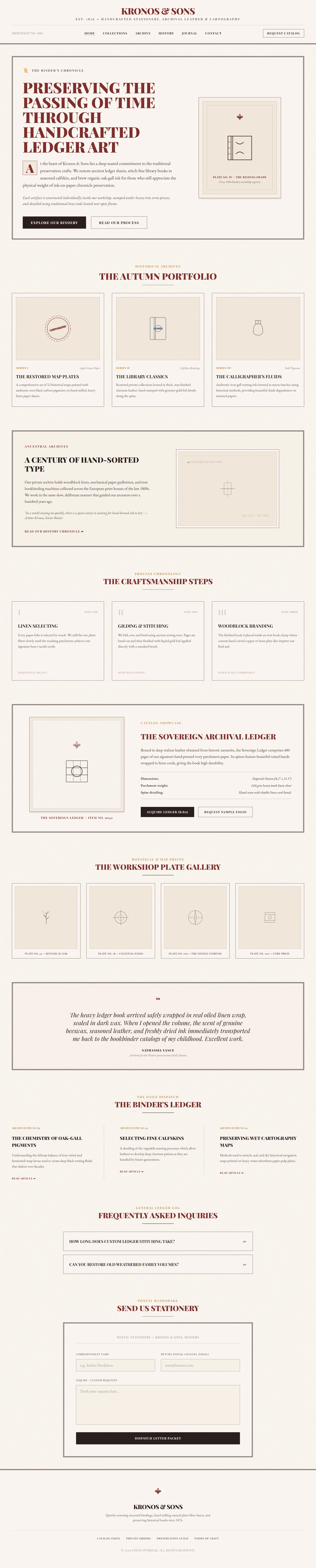
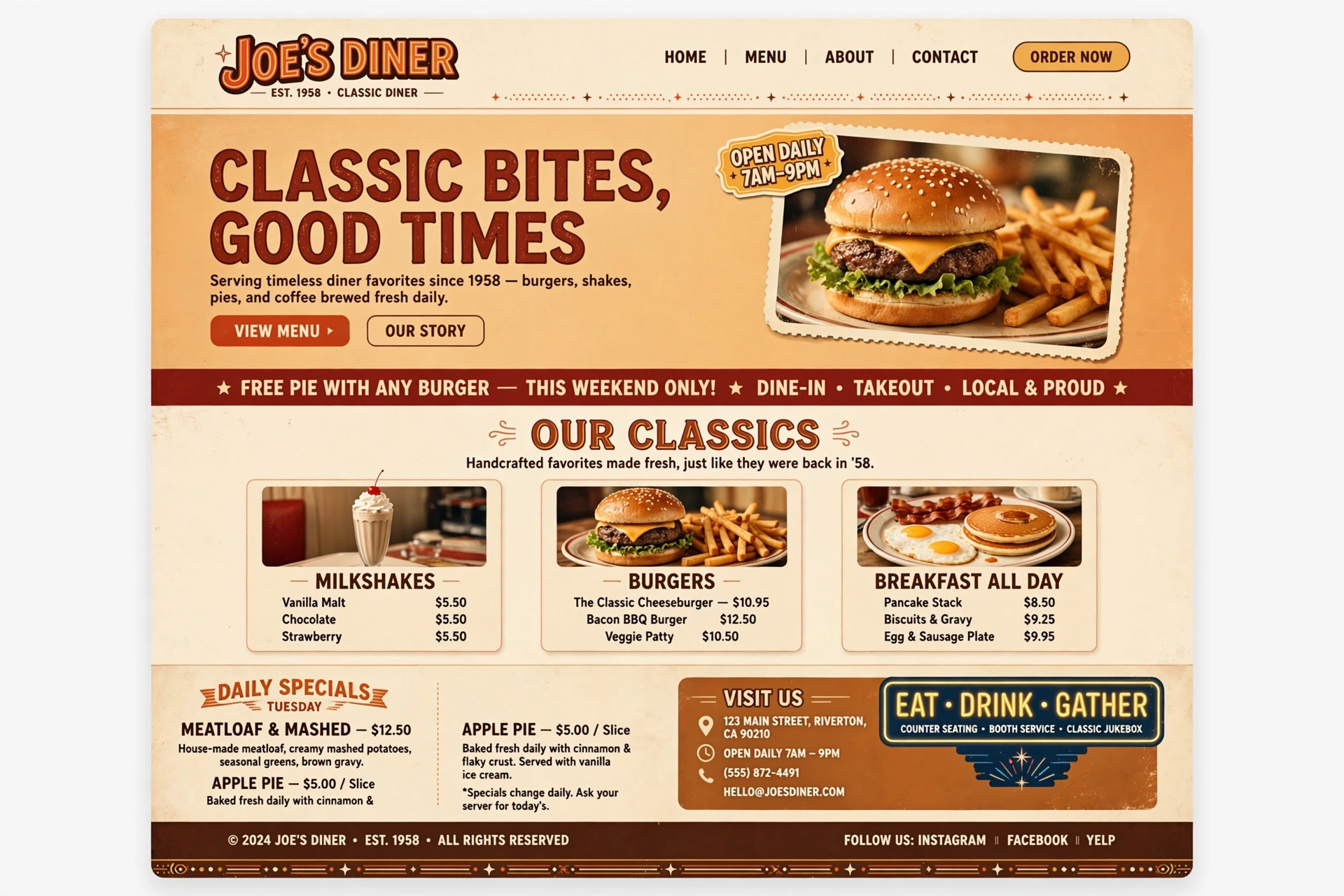
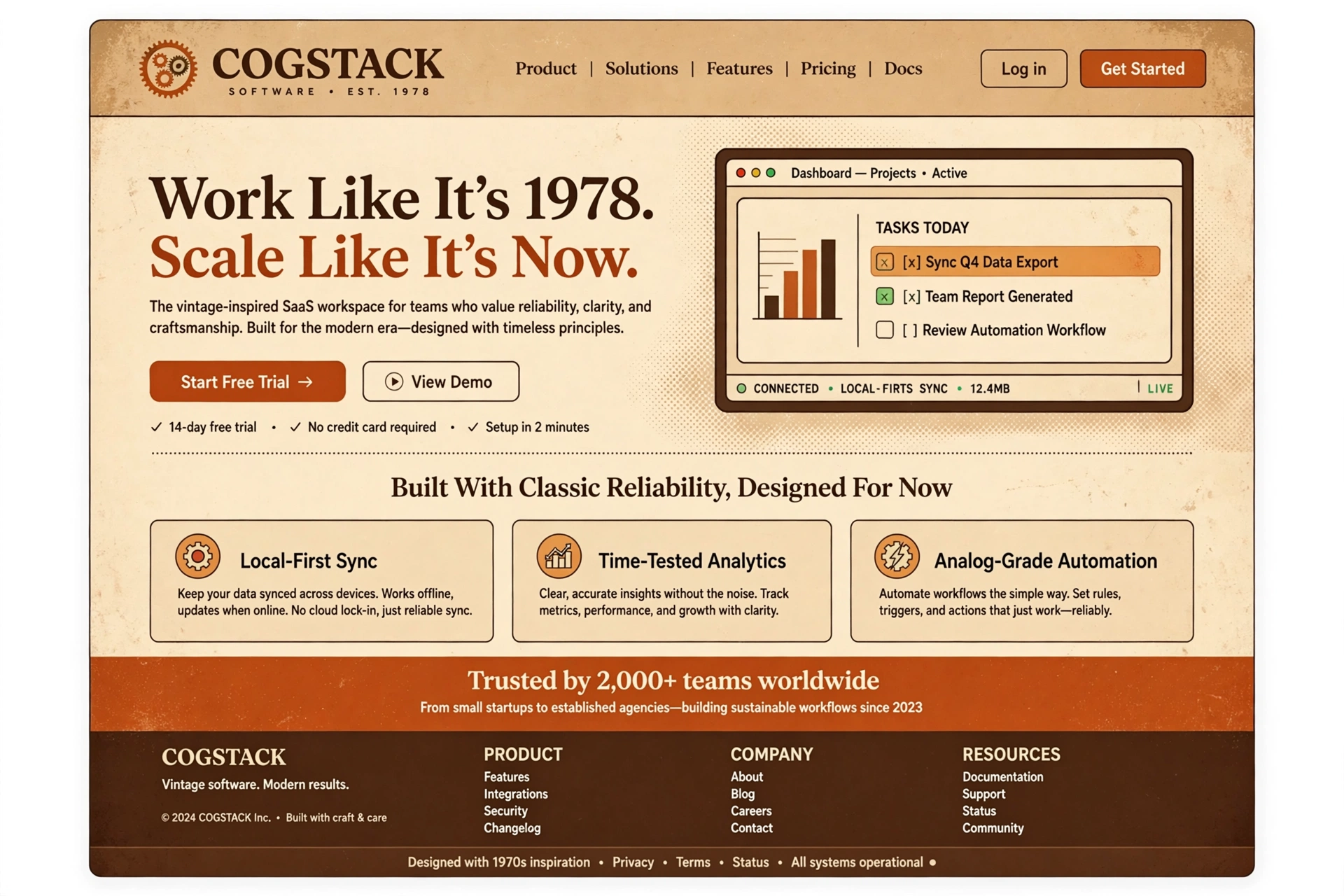
Retro and vintage web designs are timeless UI/UX approaches that draw inspiration from classic print, mid-century branding, and nostalgic visual culture. They organize content with warmth, character, and a sense of history that feels both familiar and artisanal.
Retro & Vintage in Action
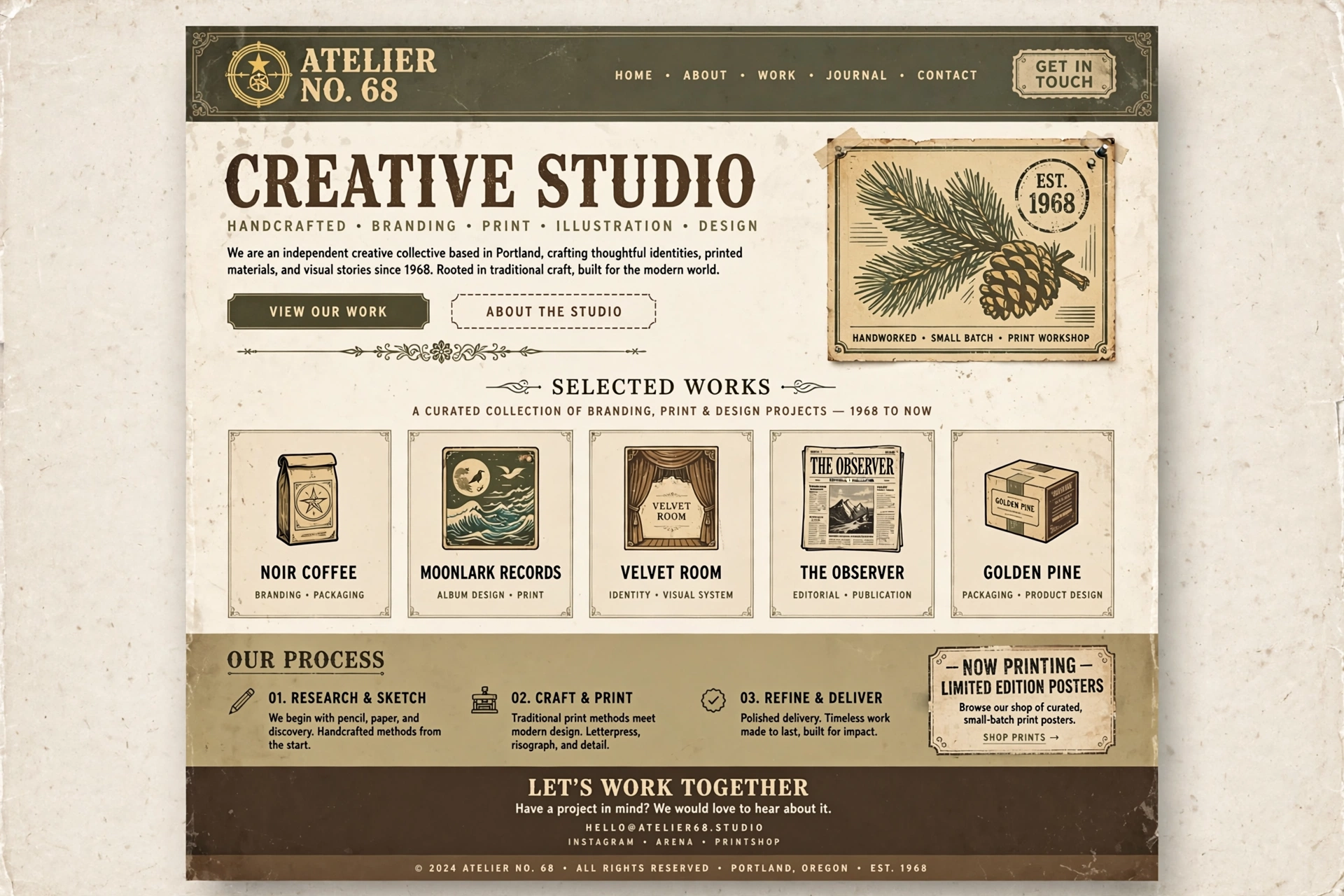
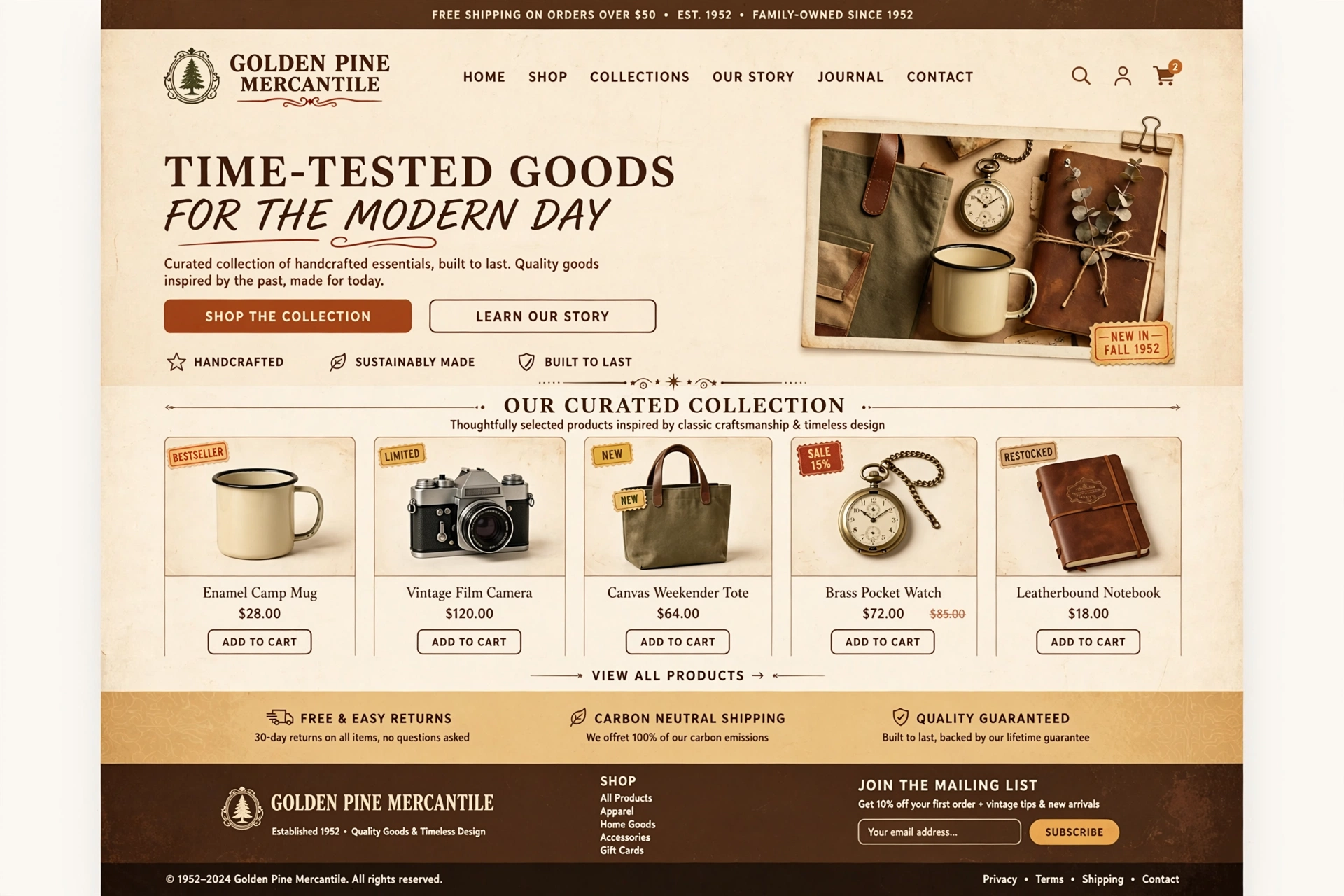
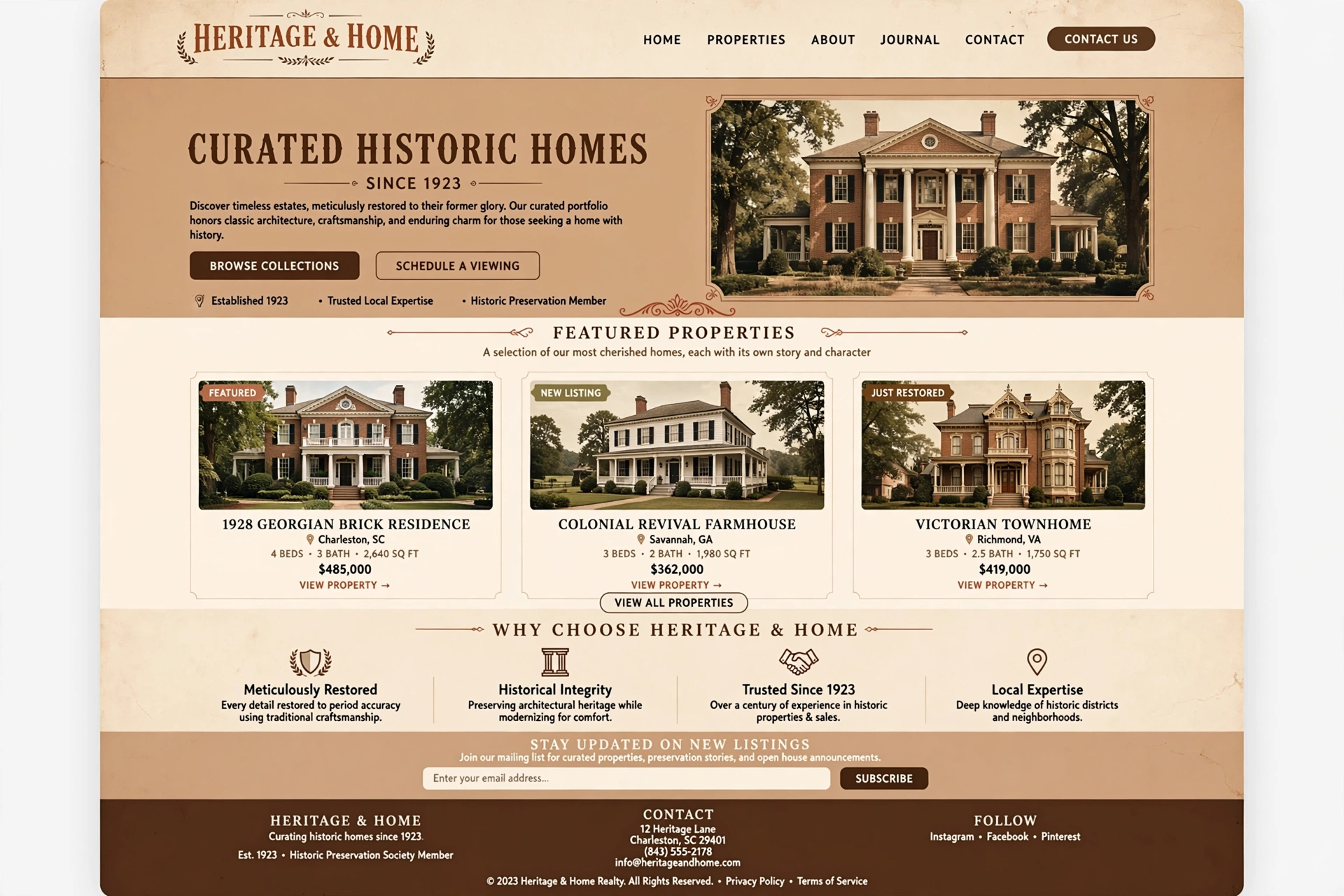
1. Retro & Vintage Design — Overview
Inspired by the golden eras of print, advertising, and product design — from the 1920s through the 1970s — Retro & Vintage design brings warmth, character, and a sense of history to digital interfaces. It has become a defining aesthetic for brands that value authenticity, craftsmanship, and timeless appeal.
For Everyone:
Retro & Vintage design is like a well-worn leather chair — it feels comfortable, familiar, and tells a story of quality and permanence that modern design sometimes lacks.
2. Key Elements of Retro & Vintage Design
Retro and vintage design is defined by several key visual elements that work together to create a warm, nostalgic, and authentic user experience.
/* Vintage Typography & Texture System */
            .vintage-text {
            font-family: "Playfair Display", Georgia, serif;
            font-weight: 500;
            letter-spacing: 0.02em;
            color: #3d2b1f;
            }

            /* Subtle texture overlay */
            .vintage-texture {
            position: relative;
            background: #f4efe6;
            }
            .vintage-texture::before {
            content: "";
            position: absolute;
            inset: 0;
            background-image: url("data:image/svg+xml,%3Csvg viewBox='0 0 256 256' xmlns='http://www.w3.org/2000/svg'%3E%3Cfilter id='noise'%3E%3CfeTurbulence type='fractalNoise' baseFrequency='0.9' numOctaves='4' stitchTiles='stitch'/%3E%3C/filter%3E%3Crect width='100%25' height='100%25' filter='url(%23noise)' opacity='0.04'/%3E%3C/svg%3E");
            pointer-events: none;
            }

            /* Ornamental border */
            .vintage-border {
            border: 2px solid #8b7355;
            border-radius: 4px;
            box-shadow: inset 0 0 0 1px rgba(139,115,85,0.3);
            padding: 1.5rem;
            }
Warm, Muted Color Palettes
Vintage design relies on earthy, muted tones — sepia, mustard, olive, faded burgundy, cream, and ochre. These colors evoke a sense of age, warmth, and authenticity.
Classic Typography
Serif and display fonts inspired by vintage signage, old books, and classic print — such as Playfair Display, Cormorant Garamond, and Cooper Black — create a timeless, elegant feel.
Texture & Patina
Subtle grain, paper texture, and distressed overlays give digital designs the tactile quality of physical print materials. This "patina" is a hallmark of vintage aesthetics.
For Everyone:
Vintage design is like an old photograph album — every page has warmth, texture, and a story that invites you to linger and explore.
3. Why Retro & Vintage Design Works
Retro and vintage design leverages the power of nostalgia — a psychological phenomenon where people feel warmth, comfort, and trust when reminded of the past. This emotional connection makes brands feel more authentic and memorable.
For Everyone:
Retro design is like a familiar song from your childhood — it instantly makes you feel safe, happy, and connected to something meaningful.
4. Best Used For & Applications
Retro and vintage design is highly versatile and works well across a range of digital products and industries that value craft, heritage, and authenticity.
- ◆ Branding & Identity — Create memorable, authentic brand identities with vintage charm.
- ◆ Artisanal & Craft Products — Convey quality, tradition, and handmade authenticity.
- ◆ Hospitality & Travel — Evoke a sense of timeless elegance and wanderlust.
- ◆ Editorial & Publishing — Create immersive, print-like reading experiences.
- ◆ E-Commerce & Retail — Stand out with distinctive, memorable product presentations.
For Everyone:
Retro design is the storyteller's palette — it gives brands the power to evoke emotion, build trust, and stand out in a crowded digital landscape.
5. The Philosophy Behind Vintage Aesthetics
Vintage design is rooted in the philosophy of "slow design" — an approach that values craftsmanship, permanence, and human connection over speed and disposability. It celebrates the beauty of imperfection and the character that comes with age.
<!-- Vintage Brand Module — Timeless & Authentic -->
            <div class="vintage-module">
            <div class="vintage-ornament">
            <svg viewBox="0 0 100 20">
            <!-- Ornamental divider -->
            </svg>
            </div>
            <h2 class="vintage-heading">
            Crafted with Tradition
            </h2>
            <p class="vintage-body">
            Every detail is rooted in timeless craftsmanship and authentic heritage.
            </p>
            <div class="vintage-border">
            <span class="vintage-badge">Est. 1954</span>
            </div>
            </div>
For Everyone:
Vintage philosophy is like a handwritten letter — it carries intention, personality, and a connection that mass-produced digital experiences simply can't replicate.
6. Color Palettes & Typography
The foundation of any vintage design lies in its color palette and typography. These two elements work together to create the emotional resonance and visual character that define the style.
/* Vintage Color Palette — Warm & Muted */
            :root {
            --vintage-cream: #f4efe6;
            --vintage-sepia: #d4c5a0;
            --vintage-mustard: #c9a84c;
            --vintage-olive: #7a7a4b;
            --vintage-burgundy: #6e3b3b;
            --vintage-navy: #2c3e50;
            --vintage-ochre: #b8860b;
            --vintage-faded-rose: #c08080;
            }

            /* Vintage Typography Stack */
            .vintage-display {
            font-family: "Playfair Display", Georgia, "Times New Roman", serif;
            font-weight: 700;
            letter-spacing: 0.04em;
            text-transform: uppercase;
            }

            .vintage-body {
            font-family: "Cormorant Garamond", Georgia, serif;
            font-weight: 400;
            line-height: 1.7;
            }
Warm, Earthy Colors
The vintage palette is built around warm, natural tones that evoke a sense of age, comfort, and authenticity. Cream, sepia, mustard, olive, and faded burgundy are signature colors.
Classic Serif & Display Fonts
Typography in vintage design draws from centuries of print tradition. Serif fonts like Playfair Display and Cormorant Garamond provide elegance, while display fonts like Cooper Black add bold character.
For Everyone:
Color and typography in vintage design are like the ingredients in a family recipe — they combine in just the right way to create something familiar, comforting, and unforgettable.
7. Textures & Visual Patina
Texture is what gives vintage design its tactile, physical quality. In the digital world, textures like grain, paper, and distressed overlays create a sense of age and authenticity that flat design cannot achieve.
/* Texture & Patina Effects */
            .paper-texture {
            background-color: var(--vintage-cream);
            background-image: url("data:image/svg+xml,%3Csvg xmlns='http://www.w3.org/2000/svg' width='100' height='100'%3E%3Cfilter id='n'%3E%3CfeTurbulence type='fractalNoise' baseFrequency='0.8' numOctaves='4' stitchTiles='stitch'/%3E%3C/filter%3E%3Crect width='100' height='100' filter='url(%23n)' opacity='0.05'/%3E%3C/svg%3E");
            }

            .distressed-border {
            border: 2px solid var(--vintage-sepia);
            border-radius: 2px;
            position: relative;
            }
            .distressed-border::after {
            content: "";
            position: absolute;
            inset: -4px;
            border: 1px solid rgba(139,115,85,0.2);
            border-radius: 4px;
            pointer-events: none;
            }

            /* Subtle vignette for aged feel */
            .vintage-vignette {
            box-shadow: inset 0 0 60px rgba(0,0,0,0.08);
            }
For Everyone:
Texture in vintage design is like the grain of old wood — it tells a story of time, use, and character that makes each piece unique and irreplaceable.
8. Brand Storytelling Through Nostalgia
Vintage design is a powerful storytelling tool. By evoking nostalgia, brands can forge deep emotional connections with their audience, communicating values like quality, heritage, and authenticity without saying a word.
For Everyone:
Storytelling through nostalgia is like passing down a family heirloom — it carries meaning, memory, and emotion that no amount of modern marketing can replicate.
9. Retro vs. Vintage — Core Differences
While often used interchangeably, Retro and Vintage have distinct meanings in design. Understanding the difference helps choose the right aesthetic for your project.
| Feature | Retro Design | Vintage Design |
|---|---|---|
| Definition | Imitates or pays homage to past styles | Authentically from or inspired by a previous era |
| Tone | Playful, bold, deliberately nostalgic | Earnest, aged, timeless and genuine |
| Application | Modern products with a nostalgic twist | Heritage brands, artisanal products, authentic storytelling |
In practice, retro design is about playful nostalgia — using vintage elements in a contemporary context. Vintage design is about authentic heritage — evoking the genuine spirit of a past era.
For Everyone:
Retro is the costume party — playful, fun, and deliberately nostalgic. Vintage is the antique shop — authentic, aged, and full of genuine character.
10. Implementation Best Practices
To implement a retro and vintage design successfully, follow these best practices:
- ◆ Choose a warm, muted palette: Use earthy tones like sepia, mustard, and olive for an authentic vintage feel.
- ◆ Select classic serif or display fonts: Use fonts inspired by vintage signage, books, and print materials.
- ◆ Add texture and patina: Incorporate grain, paper textures, or distressed overlays for an aged look.
- ◆ Use ornamental and decorative elements: Add borders, filigree, badges, and classic motifs.
- ◆ Tell a story through nostalgia: Use imagery and copy that evoke a sense of history and craftsmanship.
- ◆ Balance vintage with modern usability: Ensure the design is still functional, accessible, and responsive.
<!-- Retro & Vintage Template -->
            <!DOCTYPE html>
            <html>
            <head>
            <meta charset="utf-8">
            <title>Vintage Brand — Heritage & Craft</title>
            <style>
            body {
            background: #f4efe6;
            font-family: "Cormorant Garamond", Georgia, serif;
            color: #3d2b1f;
            }
            .vintage-hero {
            text-align: center;
            padding: 4rem 2rem;
            background: #e8ddd0;
            border: 2px solid #8b7355;
            border-radius: 4px;
            }
            .vintage-hero h1 {
            font-family: "Playfair Display", serif;
            font-size: 3.5rem;
            font-weight: 700;
            letter-spacing: 0.04em;
            }
            </style>
            </head>

            <body>
            <div class="vintage-hero">
            <div class="vintage-ornament">✦ ✦ ✦</div>
            <h1>Est. 1954</h1>
            <p style="font-size: 1.25rem; max-width: 600px; margin: 1rem auto;">
            Crafting timeless designs with authentic heritage and artisanal quality.
            </p>
            <div style="margin-top: 2rem;">
            <span style="border: 1px solid #8b7355; padding: 0.5rem 2rem; border-radius: 2px; font-family: 'Playfair Display', serif;">
            Explore Our Heritage
            </span>
            </div>
            </div>
            </body>
            </html>
For Everyone:
Implementation is about bringing the past into the present — creating digital experiences that feel warm, authentic, and timeless while remaining functional and accessible.
11. Inspirations & Examples of Retro & Vintage Design
The best way to master a design style is to study how it's being used in the wild. Here are some real-world inspirations and notable examples of retro and vintage design across different industries.
High West Distillery
High West's branding is a masterclass in vintage whiskey aesthetics — using classic typography, warm sepia tones, and vintage-inspired illustrations to convey craftsmanship and heritage.
Visit High WestLevi's — Heritage Collection
Levi's uses vintage-inspired photography, retro typography, and a warm color palette to celebrate their 150+ year history as an American denim icon.
Visit Levi'sWarby Parker — Brand Aesthetic
Warby Parker blends vintage eyewear aesthetics with modern minimalism — using classic serif fonts, muted colors, and nostalgic photography to create a timeless brand identity.
Visit Warby ParkerEtsy — Marketplace Aesthetic
Etsy's brand identity leans into vintage, handcrafted, and artisanal aesthetics — using warm colors, serif typography, and imagery that feels personal and nostalgic.
Visit EtsyDr. Bronner's — Packaging
Dr. Bronner's uses dense, vintage-style packaging with ornate typography and classic illustrations — a bold, iconic retro design that's instantly recognizable.
Visit Dr. Bronner'sThe Criterion Collection
Criterion's film packaging and website use elegant, vintage-inspired typography and design that pays homage to classic cinema and the golden age of film.
Visit CriterionFor Everyone:
Inspiration is all around us — from vintage product packaging to classic movie posters. The key is to observe the details — the typography, colors, textures, and motifs — and apply them thoughtfully to your digital projects.
12. Future Trends & Evolution of Retro & Vintage Design
As digital design continues to evolve, retro and vintage approaches are adapting to new technologies and user expectations. Here's what the future holds for these design paradigms.
AI-Generated Vintage Aesthetics
AI tools are beginning to generate vintage-inspired design elements — from retro typography to aged textures. This will accelerate the creative process while opening up new possibilities for personalized vintage aesthetics.
Digital Patina & Real-Time Textures
The future will bring dynamic, interactive textures — grain that shifts with scroll, paper textures that respond to cursor movement, and living patina that evolves over time, making digital vintage feel truly alive.
Sustainable & Heritage Branding
As consumers increasingly value sustainability and authenticity, vintage aesthetics will become a powerful tool for brands to communicate timeless values — quality, durability, and responsible craftsmanship.
Neo-Vintage & Modern Fusion
The next wave of vintage design will blend retro elements with modern minimalism — creating "neo-vintage" aesthetics that feel both nostalgic and contemporary, appealing to new generations of users.
Accessibility-First Vintage
Future vintage designs will be built with accessibility at the core — ensuring that warm, textured, and nostalgic experiences are usable by everyone, regardless of ability or device.
For Everyone:
The future is vintage. As digital experiences become more fleeting, the timeless warmth and authenticity of retro and vintage design will become increasingly valuable and distinctive.
Got questions?
Frequently Asked Questions
Everything you need to know about Retro & Vintage design — from core concepts to implementation.
Retro & Vintage web design is a timeless UI/UX approach that draws inspiration from classic print, mid-century branding, and nostalgic visual culture. It organizes content with warmth, character, and a sense of history that feels both familiar and artisanal.
It uses warm, muted color palettes, classic serif typography, textures, and ornamental elements to create digital experiences that feel authentic, handcrafted, and emotionally resonant. It's about creating a sense of heritage and quality that modern, minimal designs sometimes lack.
The key elements include warm, muted color palettes — earthy tones like sepia, mustard, olive, cream, and faded burgundy that evoke a sense of age and authenticity. Classic serif or display typography — fonts inspired by vintage signage, old books, and print materials such as Playfair Display and Cormorant Garamond.
Texture and visual patina — subtle grain, paper textures, and distressed overlays that give digital designs the tactile quality of physical print. Ornamental and decorative elements — borders, filigree, badges, and classic motifs. And storytelling through nostalgia — imagery and copy that evoke a sense of history, craftsmanship, and timelessness.
Retro design imitates or pays homage to styles from the past — it's playful, bold, and deliberately nostalgic, often using vintage elements in a contemporary context. It's about recreating the feel of a past era with a modern twist.
Vintage design, on the other hand, refers to authentic items or styles that actually come from a previous era — it's earnest, aged, timeless, and genuine. In practice, retro is the costume party — playful and fun — while vintage is the antique shop — authentic and full of genuine character. Retro is about imitation, while vintage is about authenticity.
Retro & Vintage design is ideal for branding and identity projects that need to convey authenticity and heritage. Artisanal and craft products benefit from the association with quality and tradition. Hospitality and travel brands evoke a sense of timeless elegance and wanderlust.
Editorial and publishing platforms create immersive, print-like reading experiences. And e-commerce and retail brands stand out with distinctive, memorable product presentations. It works best for brands that value craft, heritage, and emotional connection over modern minimalism. It's about telling a story of quality and permanence.
The vintage palette is built around warm, natural tones that evoke a sense of age, comfort, and authenticity. Signature colors include cream and sepia for warmth and a aged feel, mustard and ochre for a rich, golden character, olive and sage for earthy depth and naturalness.
Faded burgundy and faded rose add romantic nostalgia and softness. Navy provides a classic, timeless contrast that grounds the palette. The key is to choose muted, desaturated versions of these colors — they should feel aged and weathered, not bright and modern. This creates the authentic, nostalgic feel that defines vintage design.
Typography in vintage design draws from centuries of print tradition. Serif fonts like Playfair Display, Cormorant Garamond, and Bodoni provide elegance, sophistication, and a classic editorial feel that carries the weight of history. These fonts are perfect for headings and display text.
Display fonts like Cooper Black, Clarendon, and Windsor add bold, distinctive character reminiscent of vintage signage and posters. For a more authentic feel, consider fonts that mimic old letterpress, wood type, or hand-painted signs. The key is to choose fonts that feel timeless, authentic, and carry the warmth and character of a bygone era.
Best practices include choosing a warm, muted palette — use earthy tones like sepia, mustard, and olive for an authentic vintage feel. Selecting classic serif or display fonts — inspired by vintage signage, books, and print materials. Adding texture and patina — incorporate grain, paper textures, or distressed overlays for an aged, tactile look.
Using ornamental and decorative elements — add borders, filigree, badges, and classic motifs to enhance the nostalgic, handcrafted feel. Telling a story through nostalgia — use imagery and copy that evoke a sense of history and craftsmanship. And balancing vintage with modern usability — ensure the design is still functional, accessible, and responsive.
Excellent sources of inspiration include High West Distillery — a masterclass in vintage whiskey aesthetics with classic typography and warm sepia tones. Levi's uses vintage-inspired photography and retro typography to celebrate their 150+ year history as an American denim icon.
Warby Parker blends vintage eyewear aesthetics with modern minimalism using classic serif fonts and muted colors. Etsy's brand identity leans into vintage, handcrafted aesthetics with warm colors and serif typography. Dr. Bronner's uses dense, vintage-style packaging with ornate typography and classic illustrations. And The Criterion Collection uses elegant, vintage- inspired typography that pays homage to classic cinema. Inspiration is everywhere — from vintage product packaging to classic movie posters.
Still have questions? Let's talk
Ready to embrace the past?
Let's apply these retro and vintage design principles to your next project and create a warm, authentic, and timeless digital experience that connects with audiences on a deeper level.
Start your project